A healthy industrial refrigeration system delivers the cooling a facility needs while making effective use of its compressors, heat exchangers, controls and supporting equipment. For a cold store, dairy, food processor or ice plant, reviewing these elements together gives plant teams a clearer picture of performance. Metalex Cryogenics connects equipment manufacturing with technical support and project engineering to help customers plan dependable industrial cooling.
How does temperature fit into a complete performance review?
Room and product temperatures confirm an important part of the cooling result. Recording them alongside production activity and plant operating data explains how that result is achieved. This helps owners understand both the cooling delivered and the equipment duty behind it.
For example, a fruit cold store moves through receiving, product cooling, holding and dispatch. Each phase has its own refrigeration demand. A useful review connects temperature records with daily intake, incoming product temperature, door activity and equipment running hours. The Metalex industrial refrigeration cycle guide explains how the main components share that work.
Which readings help plant teams understand system health?
Begin with the measurements available from the installed instruments and approved control system. Record readings at a consistent time and identify the operating phase. An engineer can then compare performance under similar loading and ambient conditions.
| Review area | Useful records | What they help explain |
|---|---|---|
| Cooling duty | Room and product temperatures, intake and production schedule | The cooling requirement during each operating phase |
| Compressor operation | Suction and discharge conditions, capacity-control state and running hours | How compressor output follows plant demand |
| Electrical use | Measured power or energy, equipment status and measurement period | Energy use in the context of the work performed |
| Heat rejection | Condensing condition, ambient conditions and condenser service records | The operating conditions on the heat-rejection side |
| Equipment care | Approved oil checks, inspections and maintenance history | The condition and service needs of installed equipment |
| Controls | Available trends, equipment-state records and alarm history | How the agreed control sequence operates through the day |
The Metalex compressor efficiency and maintenance guide develops the relationship between operating data and equipment care. Manufacturer documentation provides the reference limits for the installed model.
How does compressor selection support efficient cooling?
An ammonia compressor is selected for a required refrigeration capacity at specified evaporating and condensing conditions. Its capacity-control arrangement and operating schedule can then be coordinated with the plant's changing load. This connects the machine selection with both peak demand and everyday operation.
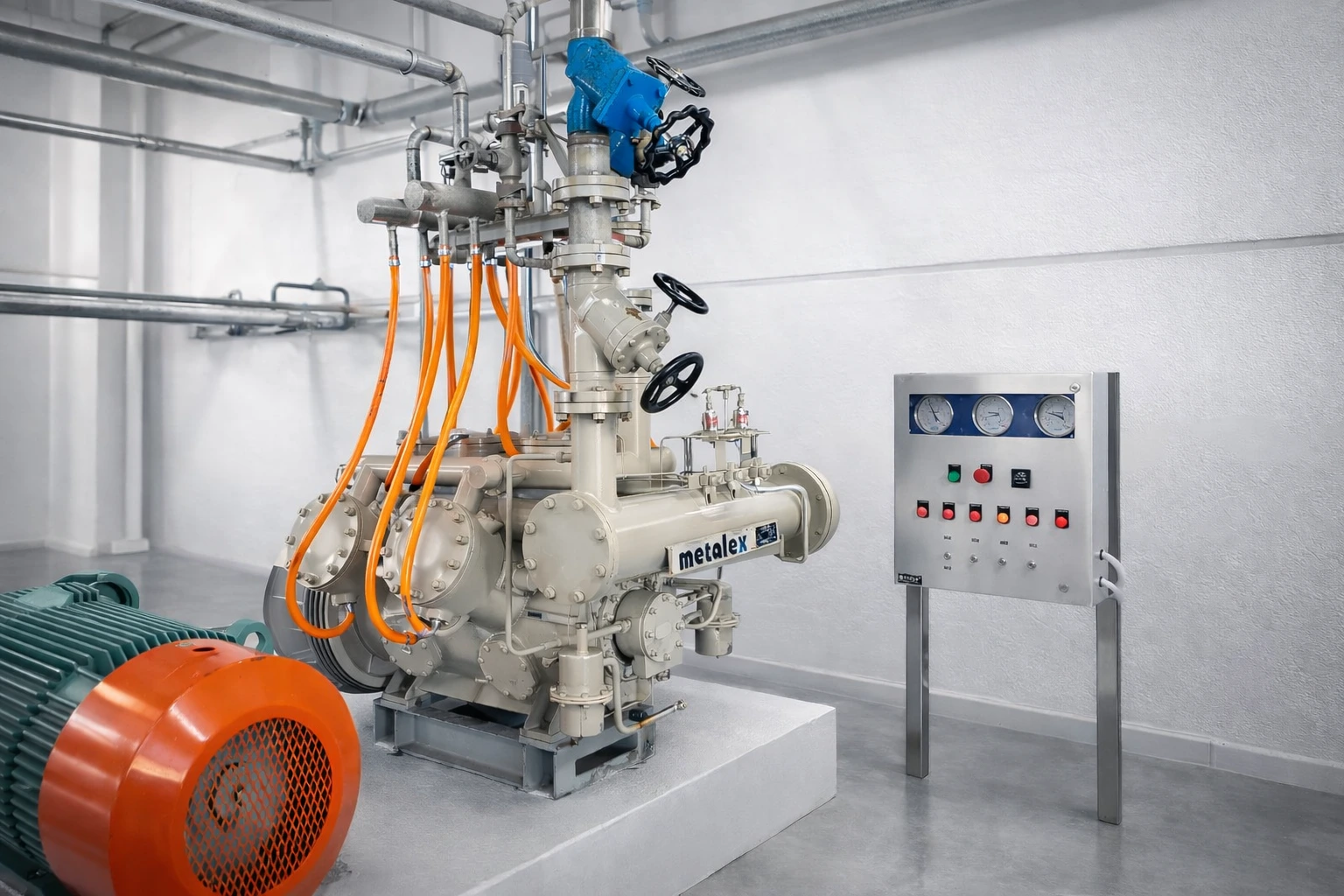
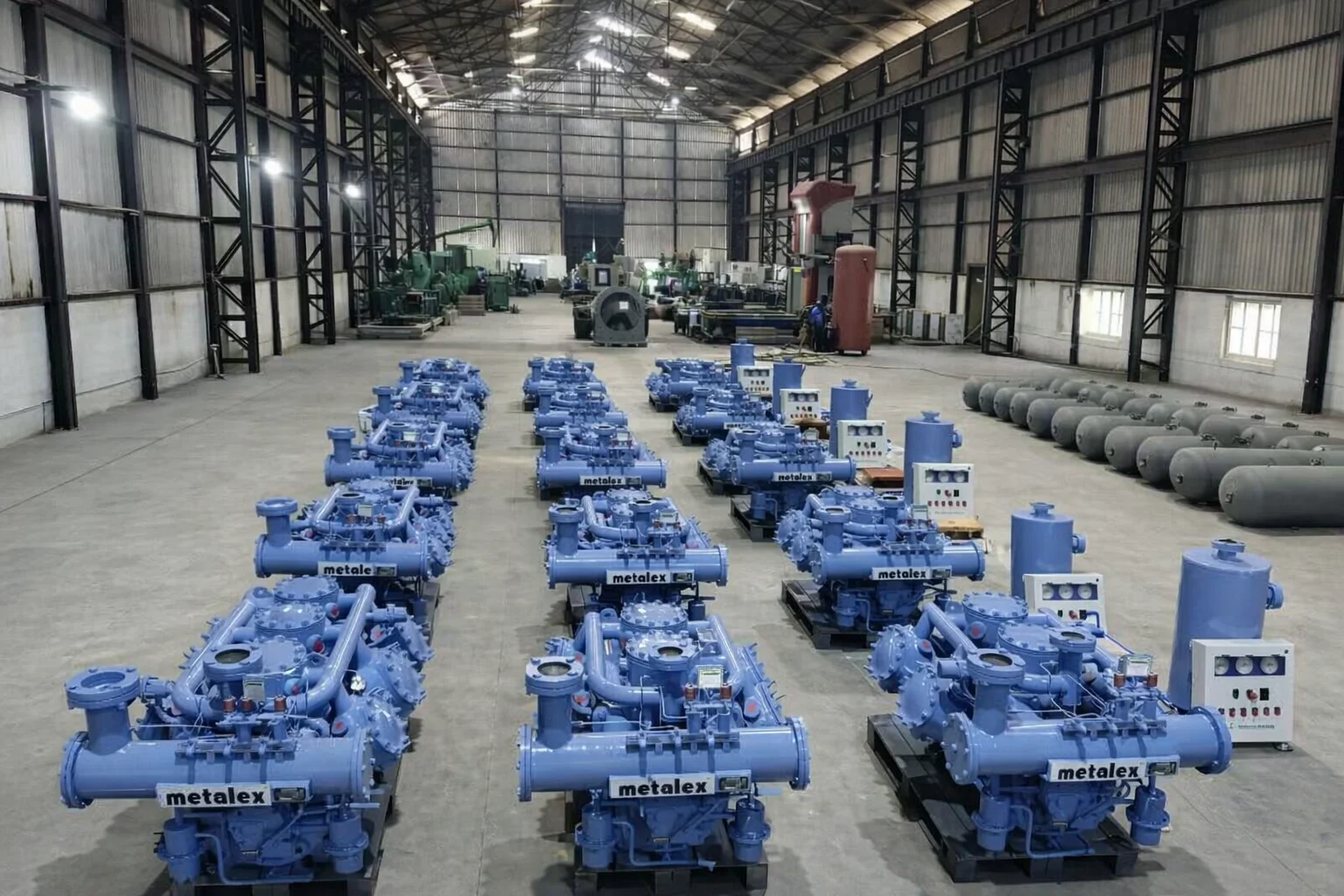
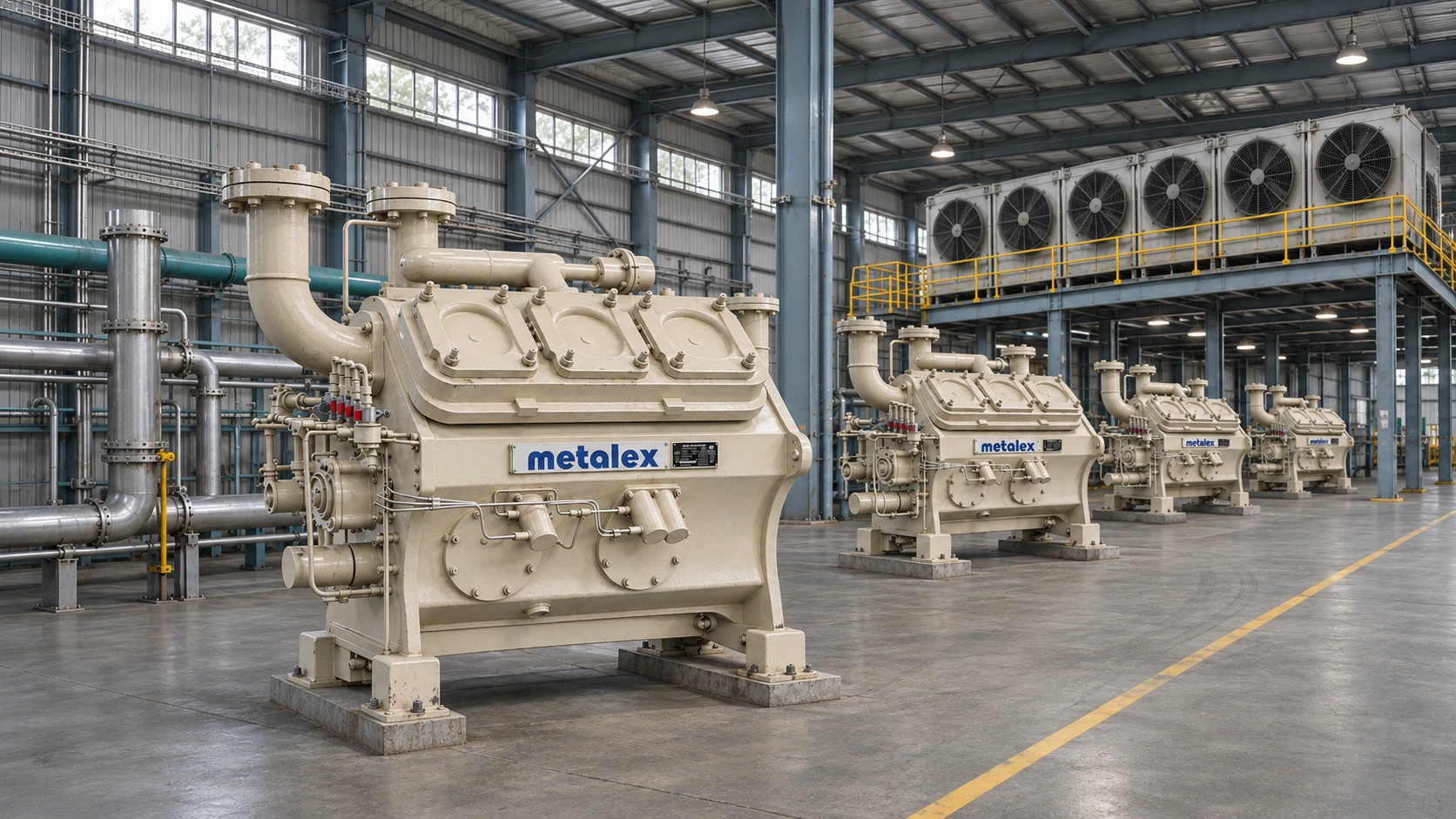
Metalex reciprocating ammonia compressors include the water-cooled MX Series, air-cooled IS Series and MXT/T Series. The MXT range is designed without compressor water cooling and includes individual-cylinder capacity control. Model selection accounts for the actual duty, utilities and site conditions.
For a new plant or expansion, the compressor capacity selection guide helps organise the enquiry. The Metalex on-site serviceability guide covers maintenance access and plant-level support.
Why review the condenser with the compressor?
The condenser releases heat from the refrigeration system. Its operating condition influences the condensing pressure against which the compressor works. Reviewing condenser performance alongside compressor loading gives the engineering team a more complete view of the operating duty.
Metalex MEC evaporative condensers are selected around heat rejection, wet-bulb temperature, condensing temperature, refrigerant and site conditions. Water-management arrangements, fan and pump operation, inspection records and service access belong in that discussion. These inputs help align the condenser with the wider Metalex refrigeration plant equipment.
How do vessels, valves and purgers contribute?
Metalex refrigeration pressure vessels serve refrigerant storage, liquid-vapour separation and circulation duties according to the system design. High-pressure receivers and low-pressure vessels each have a defined role within the ammonia circuit. Their selection is coordinated with the plant arrangement and operating requirements.
Industrial refrigeration valves support isolation, flow direction and system access. Metalex air and water purgers provide equipment options for non-condensable gas removal and water removal from ammonia circuits. These functions support refrigerant management and heat-transfer performance as part of the engineered system.
The Metalex high- and low-pressure vessel guide explains the connection between vessel duties and the complete refrigeration plant.
How can controls make performance easier to follow?
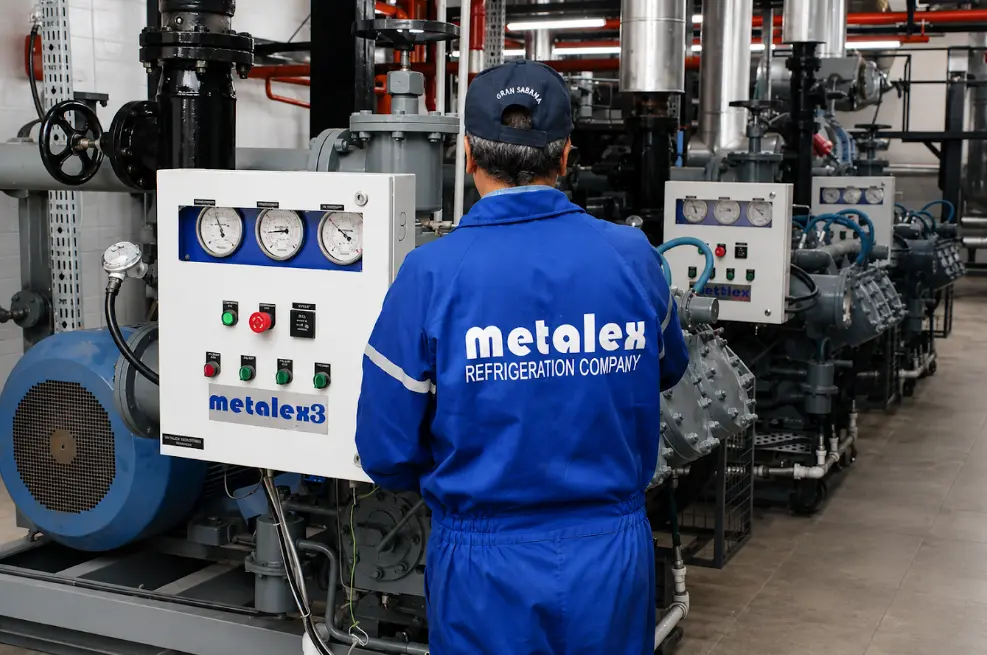
A clearly specified control system connects plant measurements with operating commands and equipment status. Depending on the agreed scope, it can present room temperatures, compressor states, selected pressures, motor information and alarms. Trend records can help engineers review performance over a defined period.
Metalex refrigeration control panels form part of its industrial equipment offering. The Metalex PLC automation and plant monitoring guide explains how interfaces, sequences, displays and recording functions are specified for each project.
For energy review, document the measurement boundary and compare periods with similar product loads and operating conditions. Compressor energy, total plant energy, refrigeration duty and production output provide different information. The cold storage electricity planning guide helps frame those records.
How does planned support strengthen long-term reliability?
Good service records connect equipment identity, inspections, operating hours, completed work and the next agreed service activities. This gives plant teams and support engineers a shared reference when planning maintenance or an expansion.
Metalex service and technical support covers equipment enquiries, maintenance planning, AMC assessments and training requests. Its technical downloads provide a route to product documents and manuals. Share the model, serial number and current documentation requirement so the team can identify the relevant material.
For the wider facility, Metalex project consulting supports discussions about operating support, plant upgrades and servicing. This connects equipment care with production schedules, utilities and future cooling needs.
How does system health connect with your application?
For cold storage facilities, review chamber conditions alongside product intake, holding and dispatch. For dairy refrigeration, map the cooling requirements across the production shift. For ice plants, connect the target output, production hours and water conditions with the refrigeration duty.
Each application benefits from a review that follows its own operating pattern. The Metalex turnkey project portfolio connects these requirements with project engineering and equipment selection.
What should you share with Metalex for a performance discussion?
- Plant details. Application, site location, refrigerant, installed equipment and required cooling capacity.
- Operating records. Product or room temperatures, production schedule, running hours, available pressure readings and energy records.
- Equipment information. Compressor model and serial number, control-panel details and recent service records.
- Your objective. A planned performance review, maintenance programme, capacity expansion or control-system discussion.
Send this information to the Metalex engineering team to define the next review. Continue exploring the Metalex industrial refrigeration blog and RefrigerationProjects knowledge centre for related equipment and project guidance.
Frequently asked questions
What is industrial refrigeration system health?
It describes how the complete refrigeration plant performs its intended cooling duty. A review connects temperatures with energy use, compressor operation, heat rejection, controls and service records. Metalex technical support can help define a review around the installed equipment.
Which records should accompany room temperature readings?
Include production or product-loading information, running hours, available suction and discharge readings, compressor capacity-control state and measured energy over a defined period. The Metalex compressor maintenance guide explains how operating data supports equipment care.
How can Metalex help review refrigeration efficiency?
Share the application, equipment list, operating conditions, production schedule and available energy records with the Metalex engineering team. These inputs help establish the review scope and identify relevant equipment, controls or service discussions.
Which Metalex ammonia compressor ranges can be considered?
The Metalex ammonia compressor range includes water-cooled MX, air-cooled IS and MXT/T Series compressors. Required refrigeration capacity, evaporating and condensing conditions, utilities and operating profile guide the model selection.
Why is heat rejection included in a system health review?
Heat rejection determines an important part of the condensing condition under which the compressor operates. Reviewing the Metalex evaporative condenser selection alongside compressor duty, weather and service records supports a coordinated plant assessment.
Can Metalex control panels support plant monitoring?
Yes. Metalex refrigeration control panels can be specified for plant control, equipment status and agreed monitoring functions. Displays, interfaces, trend records and alarm functions are defined in the project specification.
Does Metalex offer planned maintenance and operator training?
Yes. Metalex support services include AMC assessments, preventive-care planning and equipment-focused training requests. The team can review the equipment, site and operating requirements before defining the service scope.
Can an existing refrigeration plant be reviewed before expansion?
Yes. Metalex project consulting supports discussions about existing-plant upgrades, operating support and added capacity. Share the current plant details and proposed production or storage requirement to start the review.