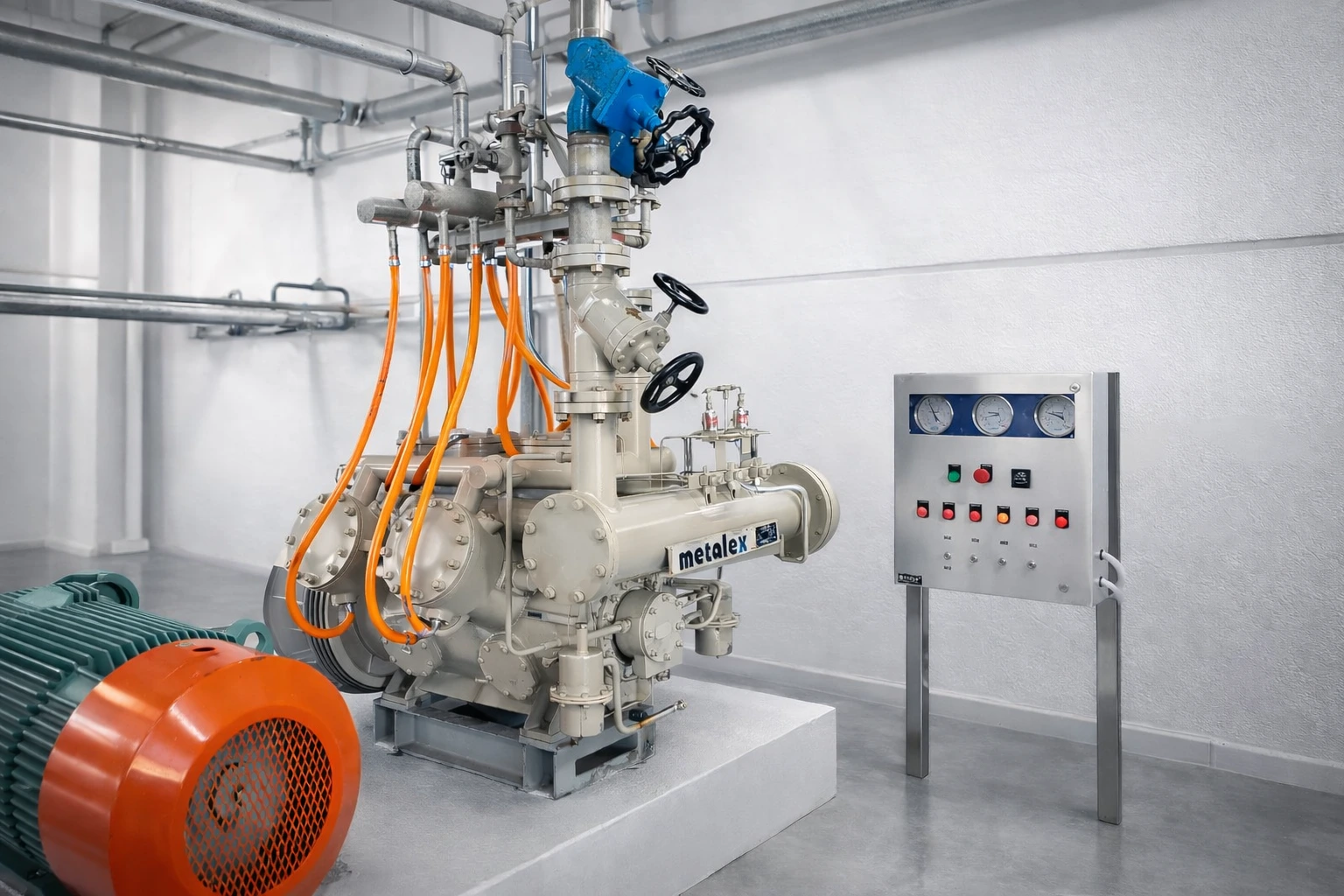
An industrial refrigeration system has to respond to changing production loads, storage-room temperatures and compressor operating conditions throughout the day. The refrigeration control panel provides an organised point for operating commands, equipment status, alarms and agreed automation. For a dairy plant, cold store, ice factory or food-processing facility, selecting a panel is therefore part of selecting the complete refrigeration plant—not simply choosing an electrical enclosure.
A refrigeration control panel coordinates electrical equipment and the control logic used to operate a refrigeration system. A PLC-based arrangement can interpret approved sensor inputs, execute control sequences, display operating information and initiate defined alarms or commands. Metalex Cryogenics control panels are part of its published industrial refrigeration equipment offering. The final functions, interfaces and protections depend on the approved plant specification.
Metalex Cryogenics control panels: the verified product offering
Metalex Cryogenics plant equipment explicitly includes PLC-based control panels and electrical control systems for industrial refrigeration operation, automation and monitoring. Its product portfolio also lists control panels as a refrigeration automation category, with a dedicated control panels product page for enquiries and technical information.
This is the right starting point for buyers who want an actual Metalex control panel discussion. Rather than assigning a fixed hardware brand, input/output count or standard communication protocol to every project, the engineering team should first establish which equipment the panel will serve, the existing site interfaces and the required operating philosophy. A panel for a single compressor package has a different functional scope from an integrated multi-compressor cold store.
Control panels
Product category · Published Metalex plant equipment
PLC-based
Control approach · As described on Metalex's site
Industrial refrigeration
Application · Configuration defined by project
What can an industrial refrigeration control panel manage?
In an ammonia refrigeration system, the control philosophy links measured conditions, permitted operating states and the output commands issued to plant equipment. Typical industrial refrigeration control panel design discussions cover compressor operation, condenser or pump coordination, temperature control, alarms, motor-control interfaces and operator visibility. These are engineering functions to specify—not an assertion that each feature is installed in every Metalex panel.
01 · Compressor control
Starting permission, run indication, duty assignment, unloading commands and orderly response to changing refrigeration demand.
02 · Temperature monitoring
Readings from agreed rooms, processes or secondary-fluid circuits, with control bands selected around the product requirement.
03 · Pressure and level signals
Visibility of relevant approved pressure and vessel-level instruments, with actions defined through the plant control philosophy.
04 · Alarms and records
Clear alarm annunciation, operating-state indications and optional history or trending where included in the system scope.
For example, a cold store handling daily dispatch may move between a busy loading period and a relatively steady holding period. A well-defined PLC control panel for refrigeration can be designed to follow those distinct operating requirements while respecting the equipment's approved limits. The available benefits are determined by plant design, commissioning, operator practices and actual load variation.
PLC, HMI, electrical panel and SCADA: understanding the difference
Not every electrical control enclosure is a fully networked plant-automation system. Understanding the main parts of a proposed ammonia refrigeration control panel helps buyers ask for a quotation with the right scope.
| Component | Typical purpose | What the buyer should confirm |
|---|---|---|
| Electrical power and motor control | Distribution, protection and switching for motors and equipment. | Motor ratings, starting method, incoming power, isolation and site electrical standards. |
| PLC controller | Processes authorised inputs and executes specified operating sequences. | Control narrative, I/O list, permissives, software access and change management. |
| HMI operator interface | Presents equipment states, readings, alarms and operator commands where specified. | Screen list, permissions, language, alarm acknowledgment and display requirements. |
| Field instruments | Provide temperature, pressure, level and equipment-status signals. | Measurement ranges, accuracy, signal types, calibration and hazardous-area suitability. |
| SCADA / remote monitoring | Centralised supervision, historical views or authorised remote visibility if included. | Interfaces, cybersecurity, ownership of data, remote access policy and acceptance tests. |
The term refrigeration plant automation describes the combined system rather than a guaranteed list of supplied devices. Ask Metalex to identify exactly which of these elements belong in the proposed control-panel package, and which will be provided by the main contractor or existing plant.
How compressor sequencing can be planned for variable refrigeration loads
Industrial refrigeration demand is rarely constant. Dairy milk-chilling duty may peak after receipt of raw milk; a frozen-food plant may have defined production batches; and a multi-room cold store may alternate between loading, pull-down and holding. In each case, compressor control panel engineering begins with a load profile and the relevant compressor capabilities.
- Recognise the operating requirement. Measure an appropriate system parameter—such as suction pressure or a process temperature—using engineering-approved instruments.
- Check equipment availability. Confirm permitted start conditions, maintenance status, protective devices and other required permissives.
- Adjust available capacity. Where appropriate, stage compressors or command supported unloading arrangements according to the agreed control sequence.
- Record the result. Present useful operating status, alarms and logs according to the control-panel specification and operator needs.
Metalex offers reciprocating ammonia compressors, including its MX water-cooled series, IS air-cooled series and MXT/T air-cooled series. Each compressor and its supported capacity-control arrangement should be checked against current technical documentation before developing sequencing logic. The blog does not imply that a single control program suits all three families or every model.
Plant monitoring: turn readings into useful operator information
A refrigeration monitoring system is useful when it helps operators make informed decisions, supports maintenance records and makes approved alarm conditions understandable. For plant owners, the important specification is not the number of figures on an HMI screen. It is whether those figures represent the measurements and actions actually needed to operate the facility.
Depending on the agreed equipment package, monitoring requirements may include compressor running status, motor current or protective status, suction and discharge conditions, room or process temperatures, liquid levels, pump states and selected condenser information. The design should state which values are monitored, which are used for active control and which have independent protective functions. That distinction makes commissioning and future servicing easier.
Alarm management deserves the same clarity. Each alarm should have an engineering-approved cause, priority, operator message, expected response and reset philosophy. Trend recording and alarm history can be specified where they add value; retention periods, remote notifications and export functions should be confirmed in the quotation rather than assumed as standard.
Safety-related controls and protective interlocks
Ammonia refrigeration plants need clear separation between routine automation and safety-critical protective functions. The ammonia refrigeration control panel specification should address applicable compressor protection, emergency-stop interfaces, alarm signals, motor protection and the response expected from independent devices. Safety functions are defined by qualified engineering and applicable local requirements, not by a generic blog checklist.
In particular, a normal PLC interface should never be treated as a substitute for independently required relief protection, gas detection, emergency ventilation or other safety arrangements. Any safety-critical interlock or integration must be validated against the approved hazard assessment and relevant engineering documentation. For broader plant review, Metalex's equipment range includes associated refrigeration components, while technical support can help route the right equipment and site details for discussion.
Connecting the panel with compressors, vessels, condensers and valves
Controls are most useful when they have been planned alongside the actual mechanical equipment. Metalex's industrial plant offering includes evaporative condensers, pressure vessels, refrigeration valves, compressors and purgers. A control-panel enquiry should identify which of these systems need electrical interfaces, instrumentation, monitoring or automated commands.
Plant measurements: Pressure · Temperature · Status → Approved control logic: PLC & Electrical Interfaces → Operator and equipment: Display · Alarms · Commands
This is a conceptual flow only; real designs use project-specific drawings, protective circuits and feedback paths. A vessel-level input, for example, may be relevant to a pump or valve control philosophy, while a condenser fan or pump sequence may depend on another set of approved operating conditions. Equipment compatibility and communication details must be established before final panel fabrication or site modification.
Where Metalex refrigeration control panels fit
The same refrigeration control panel category serves different plant objectives. The engineering scope should follow the product, process and operating pattern.
Cold storage warehouses
Multi-chamber temperature oversight, compressor staging, defrost interface requirements and changing goods-in / dispatch loads. Explore Metalex cold-storage solutions.
Dairy and food plants
Product chilling, processing shifts, utility cooling and coordinated temperature-control requirements. See food-processing refrigeration.
Industrial ice plants
Freezing, harvest sequence, refrigeration equipment and production-flow integration for the specified ice-machine design. Explore ice-plant solutions.
Process cooling
Defined temperatures, process cycles, utility interfaces and additional monitoring or validation as the application requires. See industries served.
For integrated project planning, Metalex turnkey refrigeration project solutions discuss engineering, equipment integration and commissioning support according to the final contract scope. The same buyer may need both a dedicated electrical panel and a broader refrigeration engineering package; the two should be scoped together.
Refrigeration control panel selection checklist for plant owners
The most effective way to buy a PLC control panel for refrigeration is to request a documented functional and electrical scope. Use the table below as a project discussion worksheet rather than a substitute for a qualified panel design.
| Selection area | Questions to settle before the quote | Useful document |
|---|---|---|
| Plant duty | Cold store, dairy, ice, food process; refrigerant; required temperature and shifts? | Design basis and load summary |
| Equipment count | How many compressors, motors, pumps, fans and automated valves? | Equipment and motor schedules |
| Control method | Which measurements govern sequencing, capacity adjustment and normal stops? | Control narrative / cause-and-effect |
| Electrical supply | What voltage, phase, frequency, motor rating and starting arrangement apply? | Electrical single-line diagram |
| Instrumentation | Which pressure, level and temperature transmitters or switches exist? | Instrument index and I/O list |
| Operator interface | Is a local HMI, central monitoring, trend history or remote access required? | Screen and network requirements |
| Location | What are installation environment, access, enclosure and hazardous-area conditions? | Panel location and site layout |
| Handover | Which tests, drawings, backups, manuals and operator training are required? | Inspection and acceptance plan |
Can an existing ammonia plant add or upgrade a control panel?
Yes, a control upgrade can be considered as part of an existing refrigeration plant review. The first step is an equipment and control survey, not a promise that a new cabinet will connect directly to every installed device. The survey should document field instruments, motor starters, existing wiring, legacy control logic, compressor protection, drawings, operator practices and the future operating objective.
For a cold storage control panel upgrade, the team should also establish whether the owner wants only replacement of existing controls or a broader project involving new sensors, compressor sequence changes, monitoring screens or additional chambers. Decisions about electrical interfaces and safety-related modifications require qualified design approval, managed change procedures and a controlled commissioning plan.
Metalex's support and service portal describes collection of equipment identity, site conditions and operating evidence before technical review. Project teams can use this approach to prepare a useful control-panel enquiry with the installed equipment list and current electrical drawings.
Testing, commissioning and documentation that make the panel serviceable
For any new industrial refrigeration control panel, the project handover should define how the agreed control functions are verified. Useful deliverables to discuss include an approved electrical single-line diagram, general arrangement, wiring drawings, I/O list, operating sequence, alarm matrix, FAT/SAT scope, software backup arrangements and operator documentation.
A factory acceptance test can confirm agreed panel assembly and simulated logic where specified; a site acceptance test can verify installed instruments, wiring and plant interfaces under a controlled plan. Appropriate tests, results and responsibilities should be documented. The final scope depends on the actual contract and engineering review, not an assumed universal panel specification.
What to send Metalex for a refrigeration control panel quotation
Prepare one enquiry file containing:
- Site: country, city, facility type and new-build / expansion / retrofit stage.
- Refrigeration duty: refrigerant, approximate TR or kW, operating temperatures and hours.
- Connected equipment: compressor models, motor ratings, pumps, condensers and valve actuators.
- Available documents: existing SLD, P&ID, panel photos, instrument and motor lists.
- Required functions: manual/automatic sequences, status points, alarms, trending and operator screens.
- Interfaces: existing sensors, control system, BMS/SCADA requirement and network rules, if applicable.
- Site environment: power supply, panel location, installation constraints and safety requirements.
- Project scope: design, panel supply, wiring, testing, commissioning, training and schedule.
For a focused enquiry, refer to the Metalex control panels product page and include your site-specific functional requirements. The company's contact team can route the request to the appropriate sales or technical discussion.
Why take a system-led approach to refrigeration automation?
A useful control panel is built around the refrigeration process it must operate. The value comes from having a coherent operating philosophy: equipment that communicates the right status, operators who can interpret it, electrical interfaces that match the installed machinery and clearly approved responses to changing load. This is why Metalex Cryogenics positions PLC panels alongside compressors, vessels, condensers and other plant equipment instead of presenting automation as an isolated accessory.
When reviewing refrigeration control panel options, start with the equipment duty, the operator's daily decisions and the required handover records. Then discuss which functions belong in the Metalex panel scope. This produces a meaningful basis for engineering, quotation and future service planning.
Planning a new PLC panel or a control-system upgrade?
Share your application, compressor models, refrigeration capacity, panel location, electrical supply, existing control drawings and the functions you want to automate. Metalex can review the requirement and discuss an appropriate control-panel scope.
Request a Control Panel Quote →View Metalex Control PanelsRefrigeration control panel FAQs
Yes. Metalex Cryogenics lists PLC-based control panels and electrical control systems for industrial refrigeration automation, monitoring and plant operation. The actual panel scope is defined for the project.
Its purpose is to organise specified equipment commands, electrical interfaces, operating information and alarms so the refrigeration plant can be run according to an approved control philosophy.
A PLC-based system can be specified to coordinate supported compressor operating commands and sequencing. The compressor model, protective devices, permissible controls and independent safety arrangements must be assessed by qualified engineers.
No. Motor control centres principally handle electrical motor power, switching and protection, while PLC systems execute defined control logic. A project may combine these functions in a coordinated arrangement.
An operator HMI can be part of a proposed design where specified. The currently verified Metalex product information does not establish a universal HMI specification for every panel; confirm it in the approved quotation.
These are valid project requirements to discuss. Availability, communication interfaces, cybersecurity, data retention and service responsibilities must be confirmed against the actual Metalex control-panel proposal.
Sequencing can help match available compressor capacity to changing refrigeration demand when properly designed. Actual power performance depends on the compressor, plant duty, capacity control, condensing and suction conditions and operating profile; no fixed savings can be assumed.
Typical candidates include pressure, temperature, vessel level, motor status and equipment alarms. The site instrument index and approved control narrative determine which signals are used for monitoring, control or protective functions.
Yes. Metalex provides refrigeration solutions for cold storage, dairy and food-processing applications. Panel functions are selected around the plant equipment, product-temperature requirements and operating schedule.
Yes. Begin with the existing equipment list, panel drawings, control philosophy, safety interfaces and site survey. Compatibility, change management and commissioning scope must be approved before modifications proceed.
No. Required emergency and safety functions need suitable independent or appropriately engineered arrangements under applicable rules and the site hazard assessment. Routine PLC monitoring does not replace those protections.
Share the refrigeration capacity, compressor models, motor schedule, electrical single-line drawing, P&ID, instrument list, required functions, installation environment and project location.
Start with the Metalex control panels product page or Metalex contact page. A site-specific quotation needs the equipment list, control functions, electrical information and scope of supply.
No. A single-compressor ice plant, multi-room cold store and process-cooling facility can require different instrumentation, logic, motor interfaces and operator screens. Engineering selection follows the actual duty.