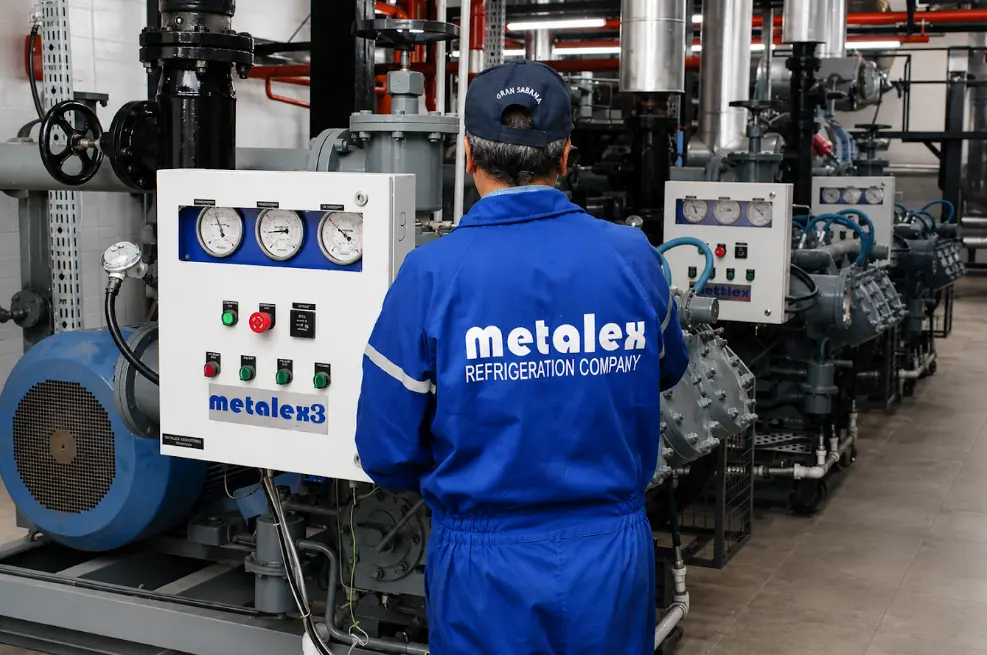
In industrial cold storage, energy performance and maintenance are closely connected. A reciprocating ammonia compressor may run for long daily hours while the refrigeration load changes with product loading, pull down, door activity, ambient conditions and room temperature. The most useful maintenance approach is therefore not simply a fixed service calendar. It is a disciplined combination of operating data, oil condition, temperature, pressure, vibration, capacity control and planned inspection.
Ammonia compressor maintenance supports energy efficiency when plant teams track suction pressure, discharge pressure, compressor temperatures, oil pressure, oil level, motor load and condenser conditions together. Oil viscosity should be treated as an operating property, not only a lubricant label: the correct oil must maintain suitable lubrication across the compressor's real temperature and pressure range. Trend changes are more useful than one isolated reading.
Why ammonia compressor maintenance matters in industrial cold storage
The compressor is the machine that maintains refrigerant circulation between the low pressure and high pressure sides of the ammonia refrigeration system. In a cold store, its operating condition changes with the refrigeration duty. A room being pulled down after product loading does not present the same load as a room already holding at temperature.
Metalex manufactures R717 reciprocating ammonia piston compressors for industrial refrigeration, including water cooled, air cooled and self cooled series. The same system level principle applies across the range: compressor selection and maintenance should be connected to evaporating condition, condensing condition, operating hours, load variation, utilities and the rest of the refrigeration plant.
Energy efficiency starts with the operating condition
An energy efficient ammonia refrigeration plant is not created by one component alone. Compressor power is influenced by the pressure lift between the evaporating and condensing sides, while actual cold storage demand changes through the day. Condenser performance, evaporator loading, piping pressure drop, capacity control and plant controls all influence the duty seen by the compressor.
The Metalex MX Series engineering guide already highlights this system view: compressor capacity, evaporating temperature, condensing pressure, condenser performance, part load operation and control strategy all affect electrical demand. That makes maintenance data useful for energy review as well as reliability.
| Operating value | Why it matters | Useful maintenance question |
|---|---|---|
| Suction pressure and temperature | Shows the low side operating condition and helps interpret evaporating duty. | Is the compressor operating around the intended cold room or process condition? |
| Discharge pressure and temperature | Shows the high side condition and compressor lift. | Has heat rejection or plant load changed from the normal trend? |
| Oil pressure and oil level | Supports lubrication monitoring and routine compressor checks. | Is the lubrication system behaving consistently with the approved operating range? |
| Oil temperature | Helps interpret the viscosity environment inside the compressor. | Is the lubricant operating in the expected temperature range? |
| Motor current or power | Provides a practical load indicator when read with pressure and capacity-control position. | Is power changing because of load, pressure lift or a maintenance condition? |
| Vibration and sound | Useful for trend-based mechanical inspection. | Has the machine developed a new pattern compared with its own baseline? |
| Capacity-control position | Shows how the compressor is matching a changing refrigeration load. | Is available capacity aligned with the real cold storage demand? |
Wear and tear should be managed as a trend, not a surprise
Wear and tear is a normal engineering consideration in any continuously operated reciprocating machine. Bearings, piston assemblies, valves, shaft sealing components, belts where used, oil systems and controls are inspected according to the compressor design and service plan. The objective is to understand how the machine is changing over time rather than wait for a single reading to become the only maintenance signal.
A practical smart maintenance programme compares current operating data with a known healthy baseline. A change in vibration means more when it is read together with cylinder temperature, suction and discharge conditions, capacity, motor load and recent service history. The same applies to sound: a new mechanical noise should be interpreted with operating condition and inspection data, not in isolation.
Metalex positions its industrial compressor ranges around service access and planned maintenance. The MXT Series uses a service friendly architecture with capacity control per cylinder, while current T Series model pages also describe features such as heavy duty axial roller bearings, a large screw on oil filter, upgraded oil pump design and minimized oil carryover. These details are relevant when a cold storage owner is evaluating long term operating and maintenance planning.
Oil viscosity is an operating condition, not just an ISO number
Oil viscosity describes resistance to flow, and it changes with temperature. In a refrigeration compressor, the lubricant has to circulate through the oil system while maintaining a suitable lubricating film at moving surfaces. That is why viscosity should be considered together with compressor type, refrigerant, oil temperature, operating pressure and the approved lubricant specification.
Cold starts and normal running conditions can place the oil at very different temperatures. Higher viscosity at a lower temperature can slow circulation, while excessive thinning at higher temperature can reduce the lubricating film available at the point of contact. The correct response is not to choose a generic "thicker" or "thinner" oil. Plant teams should use the approved oil specification for the installed compressor and evaluate oil temperature, pressure and condition as part of the maintenance routine.
What should a plant team record around the oil system?
- Oil level at the defined inspection condition.
- Oil pressure against the compressor's approved operating requirement.
- Oil temperature and how it changes with load and ambient condition.
- Filter or strainer service history so restriction and maintenance intervals are not guessed.
- Recent oil addition or service activity so changes can be connected to actual maintenance work.
- Operating context including suction, discharge, compressor load and condenser condition at the same time.
What smart maintenance means for an ammonia compressor
Smart maintenance does not have to mean a complex artificial intelligence platform. For many industrial cold stores, the first step is simpler: collect the right data at consistent intervals, compare it with the machine's own normal pattern and use the trend to plan inspection.
- Create a baseline. Record normal suction pressure, discharge pressure, temperatures, oil readings, motor load and capacity-control position after the compressor is operating steadily.
- Use one operating log. Keep shift data in a consistent format so readings can be compared rather than stored as disconnected notes.
- Look for trend movement. A gradual change in discharge pressure, motor current, oil temperature or vibration may justify an engineering review before the next major service window.
- Correlate the refrigeration system. Check condenser condition, evaporator load, room pull down, valve position and plant controls before assuming the compressor is the only cause of a changed trend.
- Plan the inspection. Use operating hours, trend movement and approved service documentation to decide what should be inspected during the next planned stop.
- Close the loop. After maintenance, record the new baseline so the plant can see whether the operating pattern returned to the expected range.
Part load operation and capacity control
Cold storage refrigeration loads change. Product loading, door opening, defrost activity, ambient temperature and room pull down can all move the compressor away from peak duty. Matching compressor capacity to the active refrigeration load can therefore influence energy use across the day.
Metalex lists cylinder based capacity control on the MX Series and capacity control per cylinder on the MXT Series. Current T Series information also notes suitability for speed control subject to final compressor and plant control design. These features allow the project and controls strategy to be planned around variable industrial refrigeration demand rather than treating every hour as the same load.
Heat rejection belongs in the maintenance conversation
A compressor cannot be evaluated independently from the condenser. If the condensing condition changes, the compressor pressure lift changes with it. That is why energy focused maintenance should include the high side of the plant: condenser fans or pumps where applicable, spray or cooling water condition, heat transfer surfaces, purging practice and the selected condensing set point.
Non condensable gases can affect condenser performance and plant efficiency. Metalex refrigeration purgers are used in industrial ammonia systems to remove unwanted non condensable gases or moisture from the refrigerant circuit, supporting stable refrigeration operation and heat transfer.
A maintenance strategy for industrial cold storage
The best maintenance plan follows the actual cold storage duty. A frozen store with deep evaporating conditions, a chilled distribution room with heavy door activity and a multi commodity facility with changing set points do not create identical operating profiles. The maintenance log should therefore include room load and product activity, not only compressor readings.
Daily and shift review
- Suction and discharge pressures
- Suction and discharge temperatures
- Oil pressure, level and temperature
- Motor current or power trend
- Unusual sound or vibration
- Condenser operating condition
Planned engineering review
- Capacity-control operation
- Valve and mechanical inspection history
- Oil filter or strainer service record
- Cooling arrangement and utilities
- Plant load changes or expansion
- Energy trend before and after service
Metalex supports cold storage and industrial refrigeration across multiple applications, with system selection built around temperature, humidity, product load, running hours, service access and future expansion. The wider Metalex industries platform connects compressor selection with the operating realities of cold storage, dairy, seafood, food processing, ice plants, pharma and process cooling.
How Metalex compressor architecture supports maintenance planning
Different compressor cooling arrangements create different maintenance priorities. The MX Series is a water cooled reciprocating ammonia compressor range, so cooling water availability and water quality are part of both selection and service planning. The IS Series is air cooled for sites where water use is limited and ambient condition matters in selection. The MXT Series is presented as a self cooled and air cooled R717 platform focused on energy efficiency, service access and extended maintenance intervals.
The correct series is therefore not chosen by maintenance preference alone. Refrigeration capacity, evaporating temperature, condensing condition, operating hours, ambient temperature, utilities and plant layout should be reviewed together. For a new cold storage or an upgrade project, Metalex can connect compressor selection with the wider turnkey refrigeration project requirement.
Smart maintenance checklist for energy focused operation
| Check | What to compare | Why it helps |
|---|---|---|
| Refrigeration load | Current product and room duty vs normal pattern | Separates real load growth from an equipment trend. |
| Suction condition | Pressure and temperature vs target duty | Shows how the evaporating side is loading the compressor. |
| Condensing condition | Discharge pressure and heat rejection vs ambient or wet bulb condition | Helps explain changes in compressor lift and power. |
| Lubrication | Oil level, pressure, temperature and service history | Supports consistent oil system operation and viscosity interpretation. |
| Mechanical trend | Sound, vibration and service history | Provides early context for planned inspection. |
| Capacity control | Active capacity vs cold storage load | Helps align compressor output with part load demand. |
| Energy trend | Motor load or power before and after operating changes | Shows whether system adjustments are improving the real plant condition. |
Metalex support for compressor efficiency and maintenance
Metalex's industrial refrigeration work extends beyond compressor supply. Current Metalex service positioning includes plant audits, energy reviews tied to operating data, compressor overhauls, preventive maintenance, spare planning, breakdown support and operator guidance. That makes the maintenance conversation useful for both existing R717 plants and new cold storage projects.
For an existing plant review, prepare the compressor model, application, suction and discharge conditions, oil readings, motor load, cooling arrangement, operating hours, recent maintenance activity and any change in cold storage load. This gives the engineering team a better starting point than a single symptom or one energy bill.
Want to review compressor energy use and maintenance together?
Share the compressor model, cold storage application, suction and discharge conditions, oil readings, operating hours, motor load and recent plant changes. Metalex can review the compressor and refrigeration system as one operating duty.
Get QuotesAmmonia compressor maintenance FAQ
Track suction pressure, discharge pressure, suction and discharge temperatures, oil pressure, oil level, oil temperature, motor load, capacity-control position, sound, vibration and condenser condition. Read these values together so the compressor is evaluated in the context of the complete refrigeration system.
Viscosity changes with temperature and affects how easily the oil circulates and maintains a lubricating film. Use the approved lubricant specification for the installed compressor and interpret viscosity together with oil temperature, pressure and operating condition rather than selecting oil from one generic viscosity number.
Maintenance supports energy efficiency by keeping the compressor, condenser, evaporating side, controls and lubrication system close to their intended operating condition. Trend logging also helps identify when power has changed because of refrigeration load, pressure lift, heat rejection or a service requirement.
Smart maintenance is a data-led approach that establishes a normal operating baseline, tracks pressure, temperature, oil, load and mechanical trends, and uses changes in those trends to plan inspection and service. It can begin with a disciplined plant log before advanced monitoring is added.
Service planning should follow the installed compressor documentation, operating hours and plant conditions. A calendar can support planning, but actual load, trend movement, service history and approved inspection requirements should also be considered.
Metalex offers MX Series water cooled compressors, IS Series air cooled compressors and MXT Series self cooled and air cooled compressors for R717 industrial refrigeration. Final selection depends on refrigeration duty, evaporating and condensing conditions, utilities, ambient conditions and operating profile.
Share the compressor model, application, refrigeration load if known, suction and discharge pressure, suction and discharge temperature, oil pressure and temperature, motor load, condenser condition, operating hours, maintenance history and any recent change in product loading or room duty.