Modern industrial food processing facility
Food processing refrigeration

Cooling built around
the process

Metalex Cryogenics engineers process cooling, chilled-water systems, rapid chilling, quick freezing, temperature-controlled rooms, and cold storage for dairy, beverages, bakery, ready-to-eat foods, ingredients, frozen products, and multi-product food plants.

Share Planning Data
Multi-zonetemperature duties
Batch + lineprocess integration
24/7production-ready duty
Indiaambient-ready design

The refrigeration plant is part of production.
Not only a utility room.

Food plants often combine process heat removal, chilled ingredients, rapid pull-down, production-room cooling, freezing, storage, and dispatch.

  • Selection based on product, recipe or process step, incoming temperature, production rate, operating hours, and peak seasonal demand.
  • Process cooling, chilled water, rapid chilling, and freezing planned around required pull-down time and the real batch or continuous-line pattern.
  • Cold rooms and production areas coordinated with hygiene zoning, people, equipment heat loads, doors, wash-down, drainage, and defrost.
  • Compressors, condensers, vessels, pumps, controls, monitoring, safety, service access, and future expansion engineered as one system.
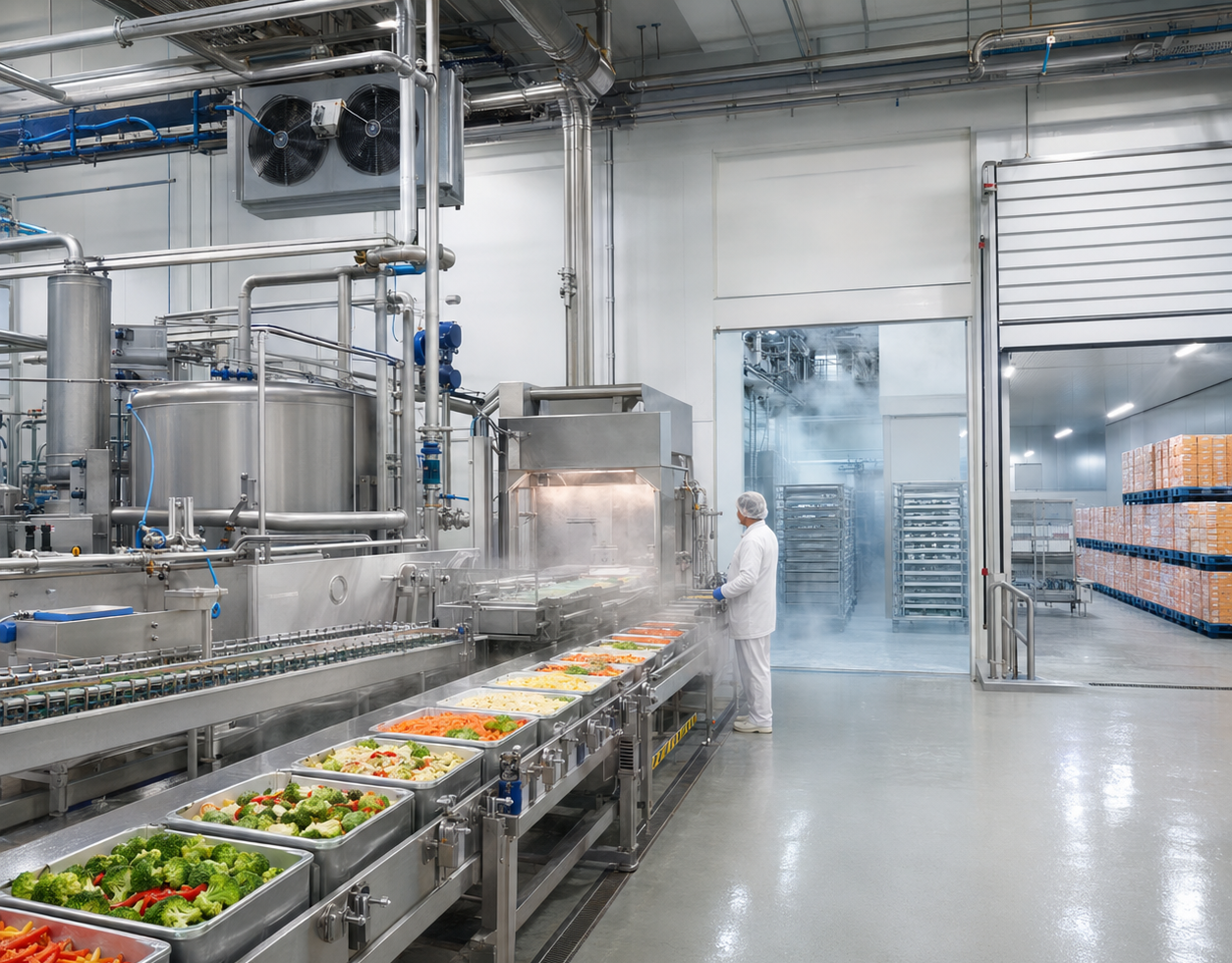
Industrial processing equipment and production environment
Process + chill + freeze + store

One refrigeration platform.
Multiple production duties.

Metalex helps plan the cooling architecture around product category, process sequence, production shifts, hygiene needs, required temperatures, and future expansion.

Stainless steel process and beverage production equipment
Application 01

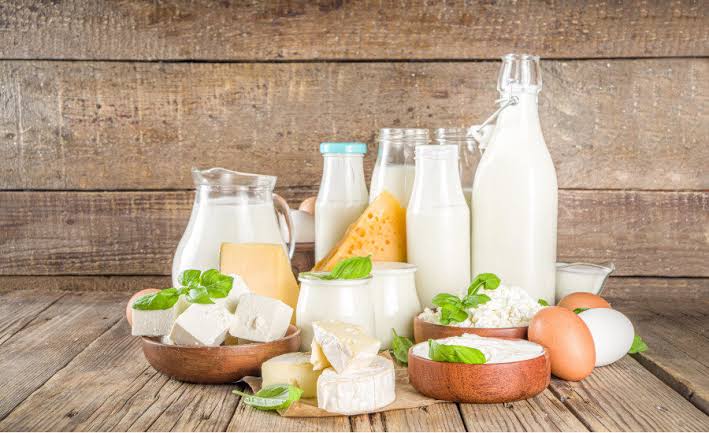
Dairy, beverages & liquid foods

Chilled water, glycol, process heat removal, ingredient cooling, fermentation support, filling-area control, and cold storage for temperature-sensitive liquid products.
Automated food manufacturing and packaging line
Application 02

Prepared foods, bakery & value-added lines

Rapid chilling, ingredient rooms, dough or process cooling, production-area refrigeration, spiral or blast-freezing support, staging, and packed-goods holding.
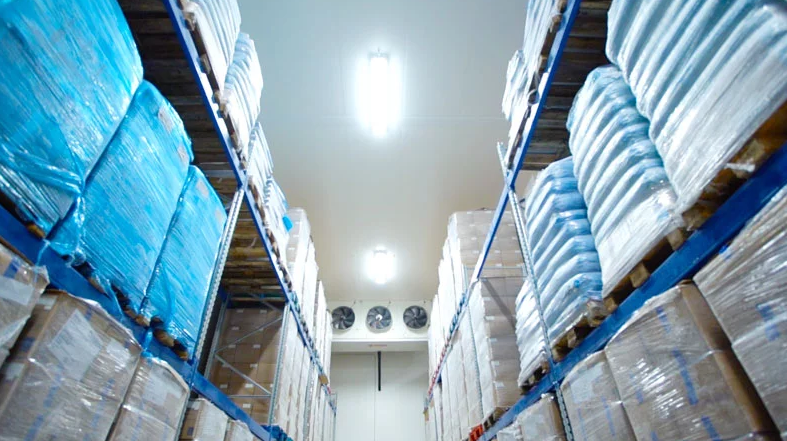
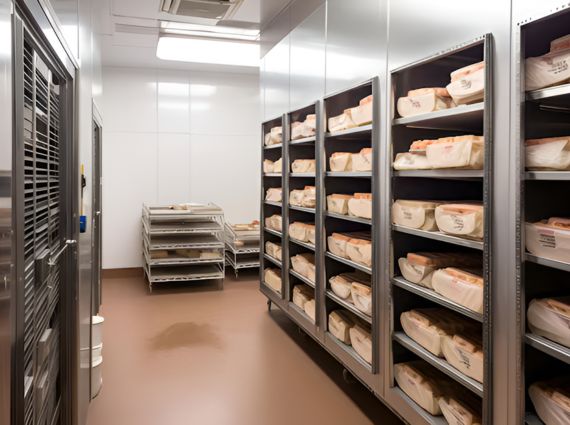
Palletised food products in temperature-controlled logistics
Application 03

Frozen foods, ingredients & distribution

Blast freezing, frozen stores, chilled and multi-temperature rooms, ante-rooms, loading docks, monitoring, and dispatch interfaces for finished goods and ingredients.

Selected from the process heat load.
Not from room size alone.

A food-processing refrigeration system must account for product load, process equipment, water and ingredient cooling, people, lighting, motors, air infiltration, pull-down time, defrost, cleaning cycles, and production peaks.

01 / PRODUCT

Define product and process

Product category, recipe or process step, batch or continuous flow, incoming condition, pack format, production rate, and quality objective.

02 / LOAD

Calculate real cooling duty

Product heat, process-equipment heat, water or glycol duty, room transmission, people, motors, doors, infiltration, and peak simultaneous loads.

03 / SYSTEM

Select temperatures and equipment

Suction levels, compressor staging, condenser duty, vessels, pumps, evaporators, heat exchangers, controls, defrost, monitoring, and redundancy.

04 / OPERATE

Plan hygiene, uptime and growth

Cleanability, drainage, maintenance access, safety, operator skill, utilities, automation, backup strategy, energy management, and future production expansion.

Core equipment for food-processing refrigeration.

Information needed for a proper food-plant selection.

Share these details with Metalex.

Early estimates are useful. Final capacities, temperatures, pull-down times, power, equipment dimensions, and performance should be confirmed against the selected process, product validation, applicable standards, and agreed design conditions.

Product category
Dairy, beverage, bakery, ready-to-eat, frozen food, confectionery, ingredients, meat / poultry, fruit / vegetable, or other product; pack format and product dimensions.
Production profile
Tonnes or litres per day, hourly peak, batch size, line speed, number of shifts, operating days, seasonality, cleaning schedule, and future expansion target.
Process temperatures
Incoming product and ingredient temperatures, target temperature at each step, process time, holding time, chilled-water or glycol supply / return temperatures, and acceptable tolerance.
Cooling / freezing duty
Rapid chilling, blast or other freezing process; product load per batch or hour; required pull-down time; target core temperature; loading method; and defrost pattern.
Rooms & storage
Production-room, ingredient-room, chilled-store and frozen-store dimensions; insulation; pallet or rack pattern; door traffic; ante-rooms; docks; and storage duration.
Hygiene & layout
High-care or low-care zones, wash-down practice, cleanability, drainage, humidity or condensation concerns, personnel movement, product flow, and maintenance access.
Site & utilities
City, ambient design condition, power supply, backup power, water quality and availability, cooling-water system, plant-room space, access, operating manpower, and automation preference.
Project status
New plant, tender, expansion, retrofit, compressor replacement, cold-store addition, process-line upgrade, automation, energy improvement, service, or spare requirement.

Common questions before
plant selection.

Product heat, process equipment, chilled water, motors, people, doors, cleaning cycles, pull-down time, and simultaneous production peaks can be larger than the room transmission load. A proper selection starts with a complete heat-load and operating-profile review.
Share the product and ingredient mass flow, specific process steps, incoming and target temperatures, batch or line time, water or glycol flow, equipment heat rejection, operating shifts, room conditions, and future production target.
Rapid chilling is considered where the process must pass through temperature-sensitive stages quickly and consistently. Quick freezing is considered where product quality, throughput, pack format, core-temperature target, and storage plan require a controlled freezing cycle. The final method must be validated for the actual product.
Often yes, but the best architecture depends on temperature levels, simultaneous loads, operating hours, food-safety zoning, redundancy, expansion, and energy priorities. Separate circuits or staged systems may be preferable when duties differ significantly.
There is no single temperature for all foods. Product category, process validation, storage duration, FSSAI requirements, customer specifications, and HACCP plan determine the setpoints. Some Indian guidance uses 4°C or below for chilled poultry products and −18°C or below for frozen products, but every project must confirm its own applicable requirement.
Ammonia is widely used in industrial food and beverage refrigeration. Suitability depends on plant scale, system architecture, refrigerant charge, site layout, detection, ventilation, safety provisions, trained operators, maintenance capability, and applicable codes.
Evaporator location, airflow, materials, access, drainage, defrost, condensation control, cleanability, door management, and service routes must support the plant's food-safety zoning and sanitation procedures without creating contamination traps or disrupting production.

Planning a food processing refrigeration project?

Share the product, process flow, throughput, incoming and target temperatures, cooling or freezing time, room and storage requirements, utilities, location, and project timeline.

Discuss with Metalex

Talk to the team about compressors, condensers, vessels, chilled-water systems, process cooling, rapid chilling, quick freezing, cold stores, expansion, retrofit, service, and spare support.
Call Now →
✅ Food processing enquiry captured. Connect the form to your backend to receive submissions.