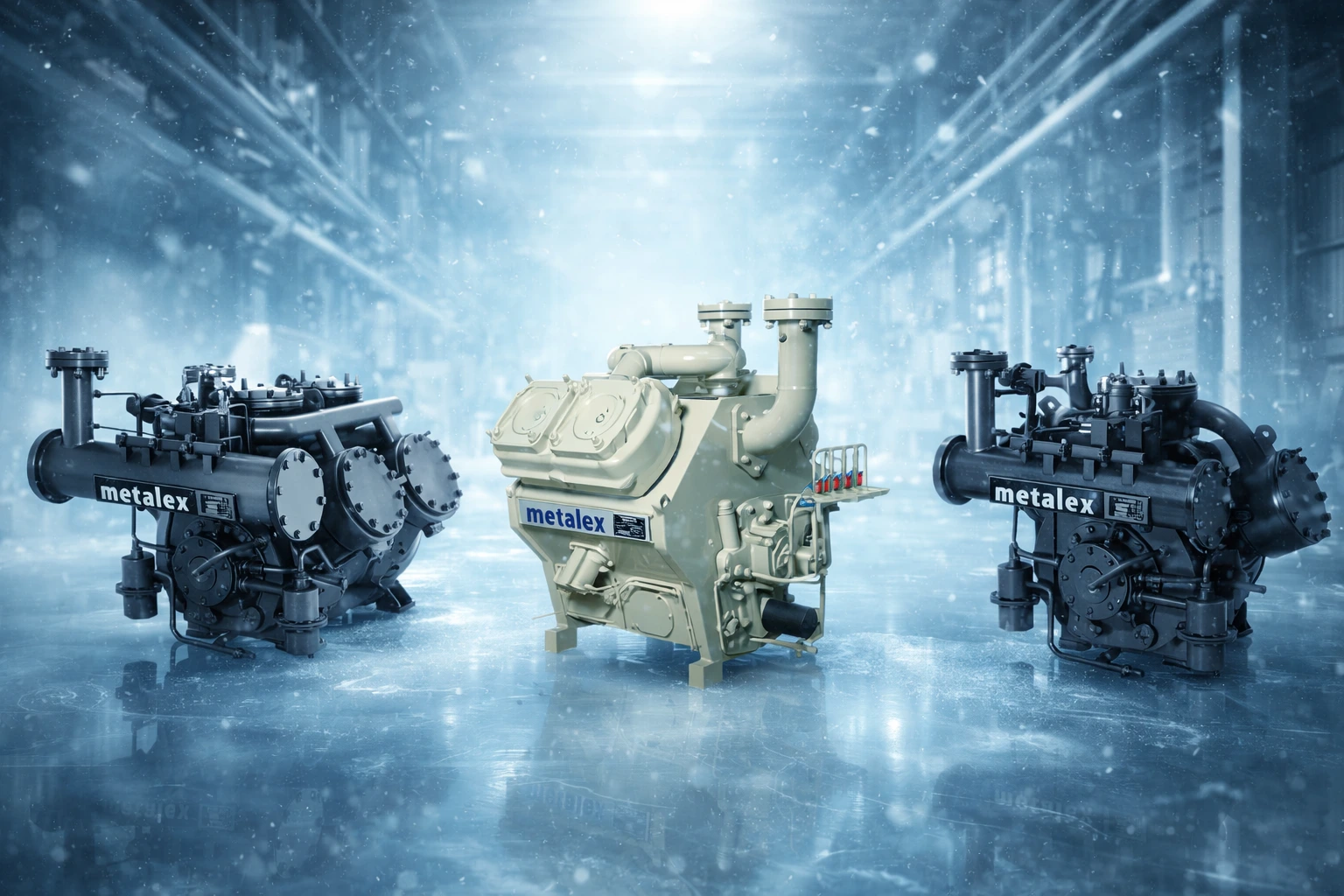
Replacing a compressor in a working ammonia refrigeration plant is an engineering decision, not a model number exchange. An existing cold storage facility may now handle more pallets, a dairy line may run longer shifts, or an ice plant may need a different production schedule. In each case, the next reciprocating ammonia piston compressor should be selected around the plant's actual refrigeration requirement, installation constraints and future operating plan.
A successful reciprocating ammonia piston compressor replacement begins with a documented plant survey. Record the existing compressor model, actual cooling duty, evaporating and condensing conditions, available utilities, motor and drive details, foundation, pipework and controls. Metalex can review these inputs and assess a suitable R717 ammonia piston compressor from the MX, IS or MXT/T Series. Final retrofit compatibility and commissioning scope must be confirmed by the project engineer.
When should an industrial refrigeration plant plan compressor replacement?
A replacement review is useful during planned modernization, additional storage capacity, production expansion, a new temperature requirement or a wider refrigeration plant upgrade. It can also form part of long term asset planning when a facility is evaluating service arrangements and future operating costs. None of these situations automatically calls for a new compressor: the first decision is whether the proposed project needs an equipment change, a control update, an additional compressor or a broader plant modification.
Metalex's ammonia piston compressor selection page explicitly accepts enquiries for an existing ammonia compressor replacement. Buyers are asked to share the installed model, operating temperatures, observed capacity, motor information, installation space and piping details. This practical starting point prevents a retrofit proposal from relying on nominal catalogue tonnage alone.
For cold chain operators, it also helps to map the replacement decision to the site's business plan. A seasonal cold store, continuous food process and batch ice plant can experience very different refrigeration load profiles even when their headline capacity looks similar. Metalex's industrial refrigeration application overview organizes equipment selection around product temperature, operating hours and future expansion.
Start with an existing compressor and plant survey
Before shortlisting equipment, build a record of the compressor and its surroundings. This is a key document in a reciprocating ammonia compressor retrofit because it captures the connection between the existing plant and the proposed equipment. The survey should be performed by qualified refrigeration personnel using plant records and appropriate site procedures.
- Machine identity: installed compressor make and model, nameplate, serial number where available, cylinder arrangement, stage and documented operating range.
- Refrigeration duty: room or process setpoints, required kW or TR, evaporating temperature, condensing temperature, working hours and daily load variation.
- Mechanical interfaces: machine footprint, foundation arrangement, drive alignment, maintenance access and available lifting route.
- Utilities and connections: electrical supply, existing motor and drive, cooling water where relevant, suction and discharge pipework, refrigerant and site ventilation.
- Plant integration: existing condenser capacity, receivers, valves, controls, instrumentation, safety devices and anticipated future expansion.
The Metalex technical support process also asks owners to provide model and serial details, operating readings, running hours, nameplate photographs and relevant plant evidence. An organized survey makes the subsequent engineering conversation faster and gives purchasing teams a common basis for comparing the proposed scope.
Select capacity using real refrigeration conditions
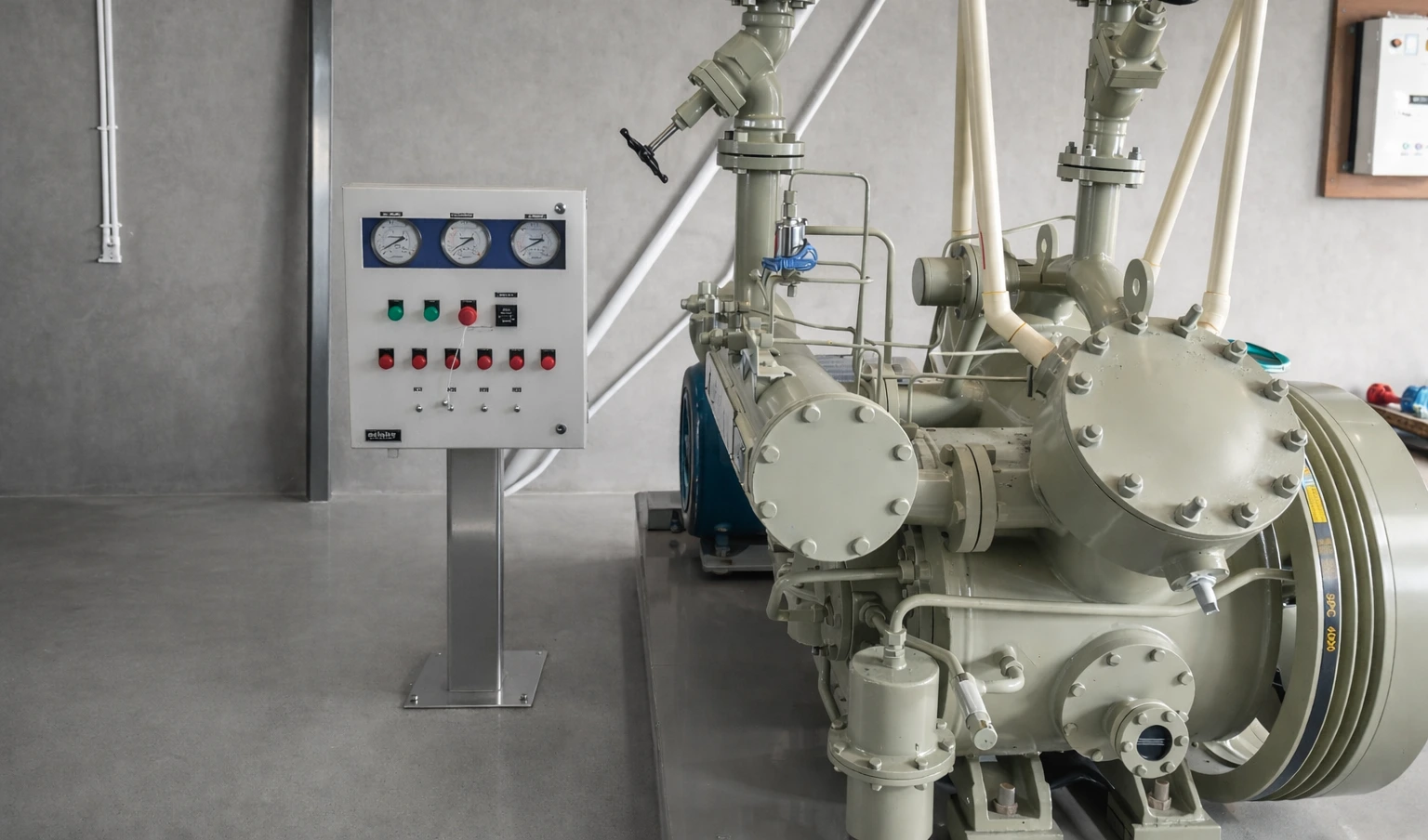
For an R717 replacement, the governing question is what refrigeration capacity the plant requires at its actual duty point. An old nameplate rating cannot establish that duty by itself. Room load, product throughput, pull down requirement, air infiltration, defrost pattern, process schedules, suction condition and condensing temperature all influence system design.
Metalex publishes model data for its MX water cooled range, IS air cooled range and MXT/T range. These figures can support preliminary shortlisting; each project still needs a suitable capacity chart or engineering review at the required evaporating and condensing conditions. For example, the MX 600 model page lists its reference capacity at 1000 rpm, 0°C evaporation and 40°C condensing. It also shows why a different duty point produces different capacity and shaft power values.
The existing compressor's observed performance, available motor power and proposed control method belong in the same discussion. If operating demand varies, consider whether cylinder capacity control, planned staging or a multiple compressor arrangement is appropriate. The goal is to match the real minimum and maximum loads without assigning an unverified efficiency improvement to the retrofit.
Choose the Metalex compressor series around site utilities
The Metalex reciprocating ammonia piston compressor portfolio offers different cooling arrangements. Each has a legitimate place in replacement planning, depending on the operating duty, utilities and equipment room. A single series should never be described as the universal replacement for every existing installation.
MX Series
Water cooled reciprocating ammonia compressors for industrial plants with dependable cooling water availability. The range includes single stage and two stage models, cylinder based capacity control and modular construction. Use the MX Series technical guide when evaluating the available stages and reference ratings.
IS Series
Air cooled reciprocating ammonia compressors designed for situations where water availability or water quality influences selection. Metalex publishes IS Series suitability for high ambient conditions up to 50°C, subject to the final model and duty review. The IS 100 page illustrates model level selection information.
MXT / T Series
Air cooled reciprocating ammonia compressors that do not require compressor cooling water. The published T Series design includes a steel welded compressor housing, temperature isolated cylinder heads, cylinder based capacity control and service oriented components. Request current model documentation and confirm performance at the proposed duty before final selection.
For a buyer choosing among multiple models, the MX 100 and MX 900 pages show the breadth of the published water cooled single stage MX range. This is a range illustration, not a claim that those two models fit every replacement. Any selection must be checked against required stage, capacity, site utilities and the actual operating envelope.
Check physical, electrical and control compatibility before ordering
A retrofit can have the correct cooling capacity yet still need engineering changes at the site. A reciprocating ammonia piston compressor replacement guide should therefore treat equipment compatibility as a separate approval stage. Document actual dimensions and obtain current general arrangement drawings for the selected compressor instead of assuming two machines will share identical mounting details.
| Retrofit interface | Engineering review | Record before approval |
|---|---|---|
| Foundation and access | Machine dimensions, foundation suitability, anchoring, alignment, service clearance and lifting access. | Existing site measurements and proposed equipment drawing. |
| Motor and drive | Required shaft power at the duty point, speed range, drive arrangement, starter and available electrical supply. | Motor nameplate, current electrical drawings and proposed motor/drive specification. |
| Pipework | Suction/discharge nozzle positions, piping loads, isolation, vibration allowances and the required pressure design. | Site photographs, line sizes and updated piping drawings. |
| Cooling arrangement | Cooling water, water quality, ambient conditions and ventilation suitable for the selected series. | Utilities survey and project design basis. |
| Controls and protection | Capacity control, operating interlocks, alarms, instrumentation and control panel integration. | Control philosophy, relevant drawings and commissioning test plan. |
These checks define the retrofit scope; they are not statements that an existing plant is unsuitable or that the selected Metalex compressor requires any particular modification. Metalex's industrial refrigeration plant equipment portfolio also includes PLC based control panels, so electrical and control requirements can be reviewed with the wider plant equipment discussion.
Match the new compressor with the complete ammonia plant
A compressor operates as part of a refrigeration circuit. Before approval, the engineering team should examine whether the connected equipment remains correctly matched to the proposed duty. This includes the condenser's heat rejection, refrigerant liquid management, relevant suction conditions, oil management, instrumentation and controls. Any proposed upgrade should be assessed against the site's operating and safety requirements.
Metalex's portfolio includes evaporative condensers for industrial heat rejection and high pressure receivers for relevant ammonia refrigerant storage duties. The wider plant equipment range covers vessels, valves and control systems. These pages are useful supporting resources when a compressor replacement involves an associated plant upgrade.
Refrigerant quality and plant operation can also be part of the assessment. Metalex's air purger and water purger range addresses noncondensable gas and water removal in ammonia refrigeration systems where the engineering review identifies an appropriate application. This is an equipment option, not a reason to add components automatically to every project.
For owners planning an integrated retrofit, Metalex turnkey refrigeration solutions can connect the compressor discussion with refrigeration plant engineering, installation coordination, testing and commissioning support according to the agreed project scope.
Evaluate operating efficiency with measured plant data
Modernization is an opportunity to review how the plant actually operates. Start with existing operating hours, refrigeration output, temperature trends, motor and drive readings, suction and condensing conditions, and load changes across the day. Compare the proposed control arrangement against that baseline. This creates a defensible route to an energy efficient ammonia refrigeration retrofit without promising an arbitrary saving percentage.
For variable duty, Metalex's MX Series engineering guide discusses cylinder capacity control and model selection under defined conditions. The T Series product range also describes capacity control per cylinder in its published design. Which arrangement is appropriate depends on the actual plant and its required operating range, not on a generic statement that one model always saves a fixed amount of electricity.
The most useful financial comparison is a lifecycle view: agreed equipment and installation scope, anticipated running profile, utilities, service access, spare planning and measured performance after commissioning. Metalex service and technical support provides a contact route for inspection, maintenance planning and operating-data review after installation.
Plan qualified installation and documented commissioning
Ammonia refrigeration modifications require qualified engineering and a site-specific safety process. The project should define equipment isolation, installation responsibilities, pressure and leak testing as applicable, inspection, instrumentation checks, operating procedures, training and controlled startup. Specific statutory requirements depend on the plant's jurisdiction and the scope of modification.
For Indian cold chain project planning, the Government of India's National Centre for Cold Chain Development publishes Engineering Guidelines and Minimum System Standards for Cold Chain Components, May 2025. For additional international engineering reference, the United States government's OSHA ammonia refrigeration guidance discusses operating and maintenance hazards, while OSHA process safety management provisions describe management of change and prestartup review for covered US facilities. The US sources are technical references, not a statement of Indian legal compliance.
A key practical distinction is between a truly equivalent replacement and a change that affects equipment specifications, operating conditions, controls or connected systems. Have the site's qualified safety and engineering team determine the applicable review, documentation and startup requirements. This article does not provide installation instructions or replace approved site procedures.
Organize the retrofit as a staged engineering project
Owners can make the process clearer by dividing a compressor replacement into decision stages. First, establish the actual duty and document the existing equipment. Second, shortlist an appropriate Metalex series and confirm the operating-point capacity. Third, approve the mechanical, utility, electrical, control and safety interfaces. Fourth, define procurement, delivery, installation and commissioning responsibilities. Finally, record the accepted operating baseline and agree the ongoing service scope.
This staged approach also helps coordinate work with the facility's product and production schedule. Metalex's support team collects the model, site, operating readings and relevant photographs for technical review. For wider installations, the project solutions portfolio describes concept development, equipment selection, refrigeration integration, installation coordination, testing and commissioning support, depending on the project.
A practical handover package should include the approved equipment model, relevant drawings, motor and control records, test and commissioning documentation, operating limits, maintenance requirements and the identified service contact. Those records make future service and plant expansion discussions more straightforward.
Where compressor replacement planning creates value
The same review process applies across industries, but the plant inputs change with the product. Metalex works with industrial cold storage, food processing refrigeration and industrial ice machine applications, while the industry portfolio includes dairy, seafood, agricultural produce, pharmaceutical and process cooling duties.
Cold stores may prioritize pull down, holding load and chamber flexibility. Food processing sites need capacity matched to production and hygiene requirements. Ice plants need compressor performance evaluated against ice output and operating schedule. In every case, the replacement should be selected for the process rather than simply for a nominal compressor size. For full cold store modernization, Metalex cold storage project solutions also explains the connection between commodity, holding period, temperature, humidity, airflow and storage layout.
The information to send Metalex for a replacement proposal
Prepare one concise technical enquiry with the details below. The goal is to let Metalex review a real industrial ammonia compressor replacement requirement rather than starting from an estimated model name.
- Application and project location, including any planned capacity expansion.
- Existing compressor model and nameplate information with photographs.
- Required refrigeration capacity in kW or TR and the operating load profile.
- Actual or design evaporating and condensing conditions with relevant readings.
- Available cooling water, ambient conditions, power supply and current motor data.
- Foundation, service access, piping connection and control panel information.
- Expected installation window and required engineering or service support.
Start from the Metalex ammonia piston compressor enquiry for machine selection, explore Metalex products for associated refrigeration equipment, or use Metalex service support when working with existing plant records.
Build the replacement around the plant, not only the compressor
The right reciprocating ammonia piston compressor replacement is one that has been checked against the plant's capacity, operating temperatures, installation interfaces and future duty. Metalex offers MX water cooled, IS air cooled and MXT/T air cooled reciprocating ammonia compressor ranges, together with related refrigeration equipment and technical support. That range gives project teams a structured way to evaluate the application without assuming interchangeability between models.
Use this guide as the starting checklist, then move from general information to a proper engineering selection. Owners who need a detailed cold storage context can also read the Metalex industrial cold storage planning guide. A documented technical enquiry is the most useful next step.
Planning a reciprocating ammonia compressor replacement?
Share your current compressor model, required capacity, operating temperatures, motor details, utilities, installation space and site location. Metalex can review a suitable R717 reciprocating ammonia piston compressor series and discuss the retrofit engineering scope.
Get QuotesReciprocating ammonia compressor replacement FAQ
Yes. Metalex asks for the existing model, operating temperatures, observed capacity, motor details, available space and piping information. Submit these through the Metalex ammonia piston compressor page so the engineering team can review the proposed replacement.
Consider MX water cooled, IS air cooled and MXT/T air cooled ranges according to capacity, operating temperatures, available utilities, ambient conditions and installation layout. The model and compatibility must be confirmed for the actual project.
That requires a model specific engineering assessment. Verify dimensions, mounting, alignment, nozzle positions, piping loads, safety systems, motor and control interfaces before any physical installation is approved.
No fixed saving can be promised without comparing measured baseline operation, proposed equipment performance and the complete refrigeration system. Metalex can review capacity control and operating requirements during model selection and technical support discussions.
Use the relevant national and local requirements and qualified project engineering. India's NCCD engineering guidelines offer cold chain planning context; US OSHA ammonia refrigeration guidance provides additional international technical reference, not Indian statutory requirements.
Metalex offers plant equipment such as condensers, vessels, controls and purgers. Its turnkey refrigeration project portfolio describes project planning, equipment selection, integration, installation coordination, testing and commissioning support depending on the project scope.