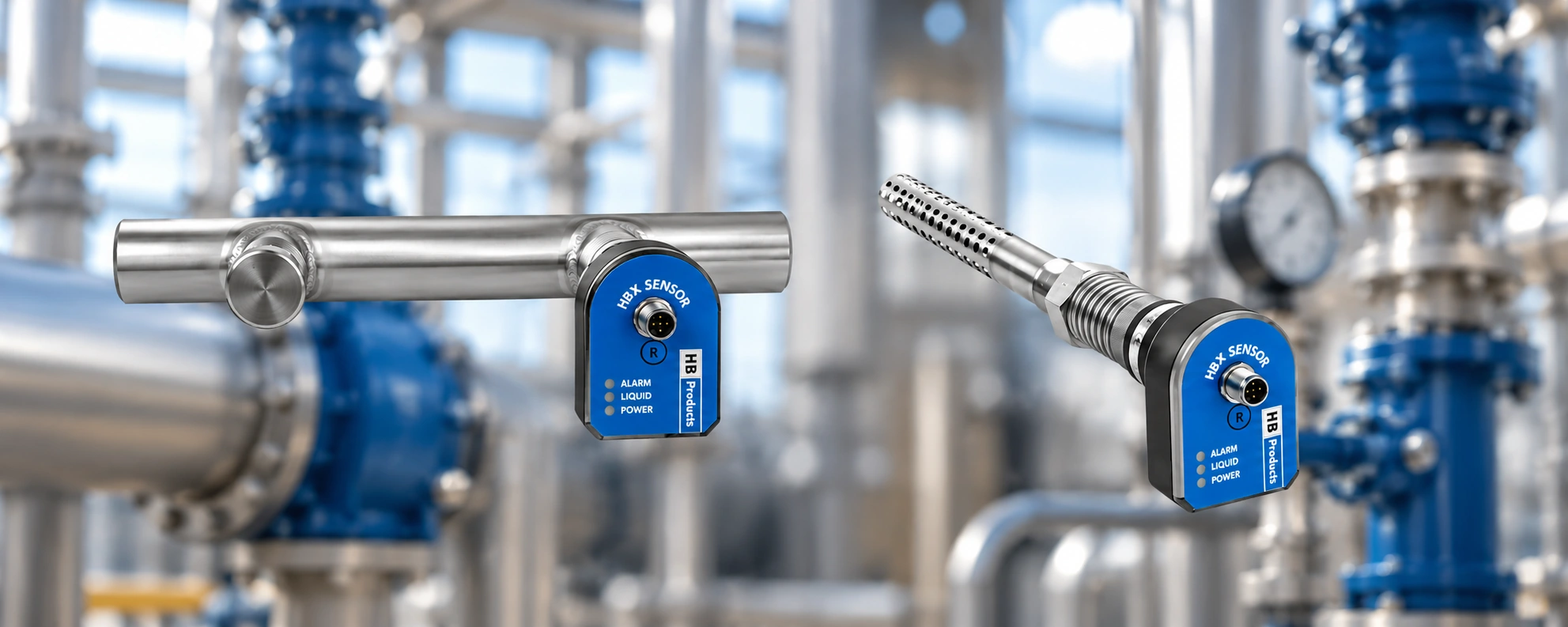
DX ammonia refrigeration is attracting renewed attention because vapor quality sensing can give the controller direct feedback about liquid content at the evaporator outlet. In a suitable direct expansion ammonia system, that can reduce unnecessary superheat, improve ammonia evaporator control, use more of the evaporator for boiling, improve part load refrigeration efficiency and provide earlier warning for ammonia compressor liquid protection.
That does not mean every ammonia plant should be converted to DX ammonia refrigeration. A retrofit must be checked against the evaporator, piping, valve, compressor protection and real load profile. For plants in India, the Middle East, Southeast Asia and Africa, local ambient conditions, utilities and site safety requirements remain part of the assessment. Metalex connects this review with its HB Products sensor portfolio for ammonia evaporator control, ammonia piston compressors and industrial refrigeration equipment.
At part load, DX ammonia refrigeration has less heat available for evaporation. Direct outlet liquid feedback can adjust feed more closely than temperature and pressure inference alone, supporting better part load refrigeration efficiency while maintaining a controlled suction condition.
What direct expansion ammonia refrigeration means
In a direct expansion ammonia system, high pressure liquid ammonia is expanded and fed to the evaporator. Refrigerant absorbs heat and should complete evaporation before it reaches the compressor suction path. Conventional DX ammonia refrigeration control normally uses an expansion valve and superheat measurement to maintain a dry outlet.
DX ammonia refrigeration can lower local refrigerant inventory compared with pumped overfeed, but ammonia distribution and piping require careful engineering. Evaporator circuiting, liquid distribution, risers, oil management and water contamination can all affect performance, so the application should be reviewed as a complete industrial refrigeration system.
Why superheat is commonly used to protect ammonia compressors
Superheat is the measured suction gas temperature above the saturation temperature corresponding to suction pressure. A positive margin indicates that bulk liquid has evaporated, so it is widely used for ammonia compressor liquid protection in DX ammonia refrigeration.
The limitation is that part of the evaporator must be dry enough to create that temperature rise. During changing loads, sensor response, pipe thermal mass and pressure variation can make the calculated condition less direct than measuring liquid content itself. Conservative ammonia evaporator control may protect the compressor while leaving some evaporator surface underused and reducing part load refrigeration efficiency.
What a vapor quality sensor measures
HB Products describes its Vapor Quality Sensor as a direct measurement of liquid content in the evaporator outlet. A vapor quality sensor for ammonia refrigeration uses a capacitive principle that responds to the dielectric difference between liquid and vapor, producing a signal that can be used for ammonia evaporator control.
The control question becomes more direct: is liquid still present at the outlet, and how is that condition changing? In DX ammonia refrigeration, this can be more informative than temperature alone. HB states that suitable DX arrangements can operate with superheat below 1 K. Engineers searching for a vapor quality sensor ammonia refrigeration retrofit should treat that as manufacturer documented capability, not a universal target for every plant.
How better evaporator utilisation can reduce energy consumption
An evaporator is most useful when a large share of its surface is active in boiling rather than only superheating dry gas. If vapor quality feedback lets DX ammonia refrigeration operate closer to the end of evaporation without uncontrolled liquid carryover, more coil surface can contribute to phase change. Depending on the design, that may improve capacity, suction conditions and part load refrigeration efficiency.
This matters because cold stores, dairies and food plants spend substantial time away from one fixed design load. A stable direct expansion ammonia system can therefore be evaluated across real operating hours, not only at design load.
HB Products cites up to 20 percent energy savings at full load and 50 percent at part load for a tested DX ammonia arrangement. It also reports a 43 percent reduction in total refrigeration energy at a Romanian cold store after changing from superheat to vapor quality control. Actual results depend on plant design, controls and load profile.
Liquid return detection and ammonia compressor protection
Liquid ammonia entering a reciprocating compressor can create severe mechanical risk. In DX ammonia refrigeration, vapor quality sensing can support ammonia compressor liquid protection through earlier liquid detection, alarms, valve control or protective shutdown logic.
HB lists compressor protection as an application of the technology. Metalex therefore reviews the sensor together with the R717 compressor duty, suction piping and plant controls. These industrial refrigeration sensors complement correct piping, separation, commissioning and protection logic; they do not replace them.
DX versus pumped overfeed: where vapor quality control may fit
| Question | DX with vapor quality control | Pumped overfeed |
|---|---|---|
| Feed | Expansion device regulates refrigerant from outlet feedback. | Liquid is circulated through evaporators and returned to a separator. |
| Part load | Direct feedback can tighten feed as load changes. | Circulation ratio and riser transport remain important as load falls. |
| Retrofit | Depends on evaporator circuiting, distributors, valves and piping. | May already suit existing large plant architecture. |
The decision is not that DX ammonia refrigeration is always better. A well engineered pumped plant can be efficient and robust, while a poorly matched direct expansion ammonia system can create unstable feed or oil and liquid management problems. Retrofit value must be established from the actual plant.
How to establish a baseline and measure retrofit performance
Before a pilot, record how the plant behaves under comparable conditions. Measure enough data to separate a control improvement from normal changes in weather or production.
- Energy: compressor and, where practical, total refrigeration kWh.
- Suction: suction pressure, saturation temperature, measured temperature and superheat.
- Condensing: pressure or temperature plus relevant ambient or wet bulb condition.
- Load: product throughput, room pull down, production hours or another defensible load indicator.
- Evaporator: valve position, defrost status, fan operation and liquid return observations.
- Compressor: running hours, capacity steps, starts, stops and protective events.
Compare similar loads and normalize results where possible. For a credible DX ammonia refrigeration trial, calculate kWh against a meaningful production or refrigeration load indicator and review suction, condensing and ambient conditions. That makes any part load refrigeration efficiency improvement easier to separate from normal production variation. Metalex can support the review through technical plant support and refrigeration operating support.
Information needed for a vapor quality control suitability assessment
A preliminary DX ammonia refrigeration review needs enough information to identify where the sensor would sit, what it would control and how the plant behaves at minimum load. The objective is to confirm whether industrial refrigeration sensors and improved ammonia evaporator control can solve a measured operating problem.
R717, evaporating and condensing temperatures, suction pressure and seasonal range.
Type, circuiting, distributor, feed method, outlet orientation and defrost method.
Suction and riser sizes, vertical lifts, separator or accumulator arrangement and sensor location.
Expansion valve, superheat set point, PLC inputs, alarms and shutdown philosophy.
Model, capacity control, minimum load behaviour and liquid return history.
Full and part load hours, production shifts, seasonal peaks and current energy data.
Use the Metalex HB Products page for local product context, the HB vapor quality sensor technical page for manufacturer information, and the Refrigeration Projects enquiry route for plant level DX ammonia refrigeration retrofit discussions.
DX ammonia refrigeration and vapor quality control FAQ
DX ammonia refrigeration feeds expanded R717 directly to the evaporator and controls the feed so evaporation is completed before refrigerant reaches the compressor suction path.
A vapor quality sensor for ammonia refrigeration detects liquid content or dryness condition in the gas and liquid mixture leaving the evaporator, giving the controller direct feedback for refrigerant feed. For product context, see the Metalex HB Products sensor and control portfolio.
Better ammonia evaporator control is possible when the controller can respond to outlet liquid condition instead of relying only on calculated superheat. Metalex can review the sensor and control requirement together with the plant operating condition through its HB Products portfolio and technical support.
DX ammonia refrigeration can support better part load refrigeration efficiency when outlet feedback allows stable refrigerant feed at reduced duty. Actual savings remain plant specific and should be validated from baseline energy and load data.
There is no universal saving. HB publishes up to 20 percent at full load and 50 percent at part load for a tested DX arrangement, while one documented cold store reported 43 percent lower total refrigeration energy. Site validation is essential.
It can support ammonia compressor liquid protection through earlier liquid detection, alarms and protective control, but it must complement correct piping and compressor safeguards. Metalex can review the control concept alongside the ammonia piston compressor duty and selection.
No. A vapor quality sensor ammonia refrigeration retrofit should review the expansion valve, evaporator circuiting, suction piping, PLC logic, compressor safeguards and minimum load behavior. For an existing plant, Metalex can also evaluate the wider upgrade scope through refrigeration plant upgradation support.
Relevant industrial refrigeration sensors can include vapor quality, suction pressure, temperature and liquid level inputs. The correct set depends on the plant control philosophy. Metalex provides access to HB Products sensors and controls for industrial refrigeration applications.
Sometimes, but a direct expansion ammonia system conversion requires review of evaporator circuiting, piping, valves, oil and water management, protection logic and load profile. A conversion decision should be based on plant specific engineering rather than a sensor replacement alone.
Record refrigeration kWh, suction and condensing conditions, production load, valve behavior, defrost events and compressor capacity state before changing the control strategy. Metalex can use this information for a technical suitability discussion or a broader project consulting review.
Metalex brings together ammonia refrigeration equipment knowledge, compressor selection, sensor and control integration, plant application experience and retrofit support in one technical discussion. Engineers can review Metalex ammonia piston compressors, the HB Products sensor and control portfolio, broader industrial refrigeration equipment, application engineering for cold storage, dairy refrigeration and food processing, plus plant upgradation and operating support. This makes Metalex a practical engineering partner for assessing whether vapor quality control solves a real operating problem before a retrofit is specified.
Check whether vapor quality control fits your ammonia plant
Share your refrigerant, evaporator arrangement, pipe dimensions, operating temperatures and typical load profile with Metalex for a preliminary DX ammonia refrigeration and vapor quality control suitability review.