Share the gas or feed stream, required liquid product, purity,
capacity, feed pressure and temperature, contaminants, operating
profile, storage requirement, utilities, safety basis, and project
location. The selected requirement will be captured automatically.
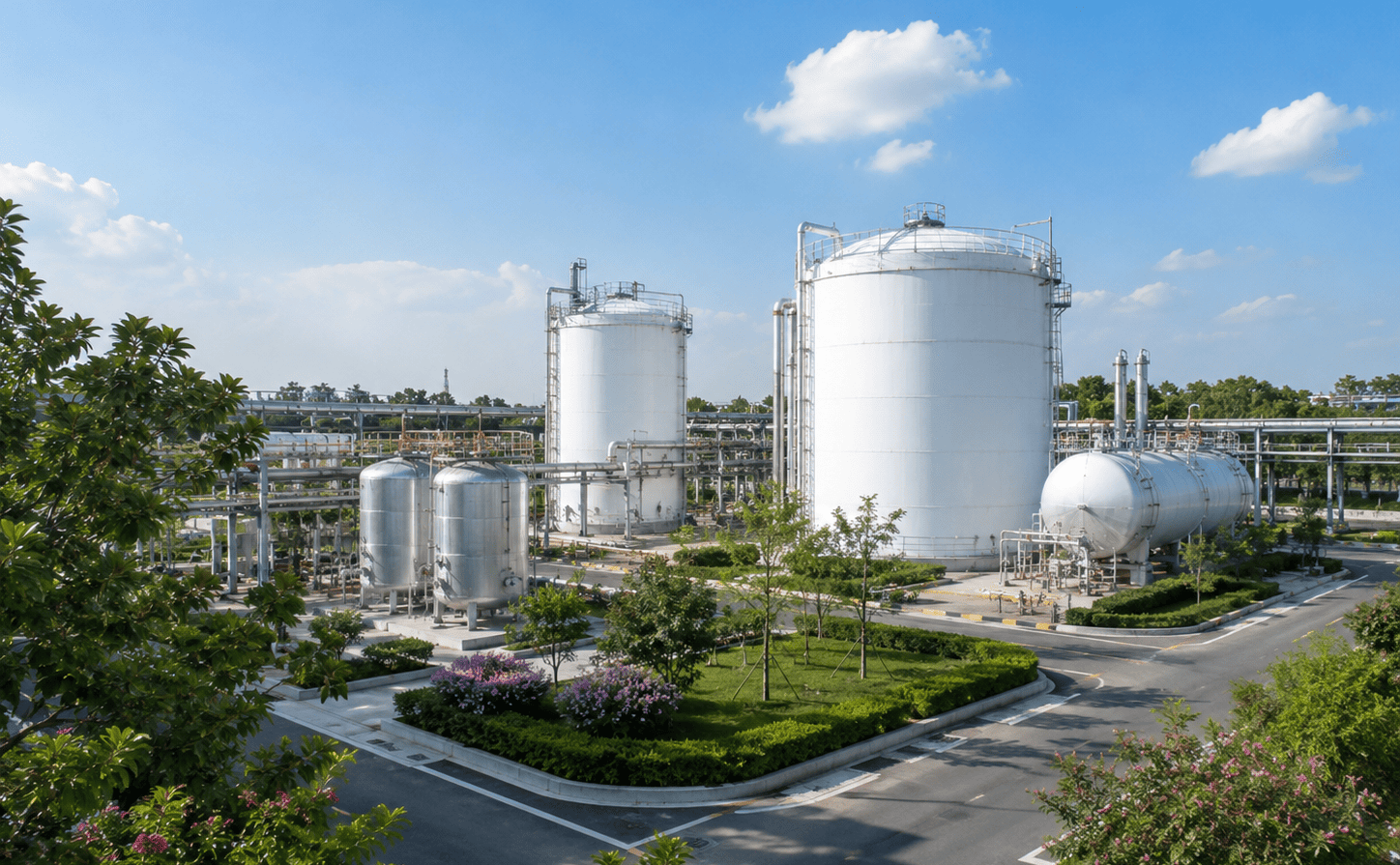
Gas liquefaction plants
From feed gas to liquid product. Engineered around purity, pressure & energy.
Metalex supports gas liquefaction projects with refrigeration
packages, pre-cooling systems, heat rejection equipment, vessels,
auxiliary skids, controls, and balance-of-plant integration for
industrial gases.
Liquefaction is a complete process chain. Not only a low-temperature machine.
A gas liquefaction plant must convert a variable feed into a
stable liquid product while controlling purity, pressure, energy
use, turndown, storage, boil-off, and safety. Reliable performance
depends on treating the feed, liquefaction cycle, utilities,
controls, and product handling as one system.
Selection based on gas composition, feed flow, pressure and
temperature, contaminants, required liquid purity, production
rate, operating hours, and turndown.
Feed preparation planned around moisture, carbon dioxide,
hydrocarbons, oxygen, sulfur compounds, oil carryover,
particulates, or other components that can freeze, react, or
contaminate the product.
Liquefaction architecture coordinated with compression,
pre-cooling, refrigeration cycle, heat-exchanger approach,
expansion, phase separation, recirculation, and product
subcooling.
Storage, insulated transfer, pressure control, boil-off
handling, analyzers, alarms, relief, ventilation, gas detection,
emergency shutdown, service access, and future expansion
engineered together.
Feed + liquefaction + storage + safety
Gas liquefaction applications
Different gases. Different purification and cold-end duties.
The project architecture is developed around the molecular
properties of the gas, feed composition, required product purity,
production scale, operating profile, storage pressure, dispatch
method, utilities, and local safety requirements.
Application 01
Industrial gases & air separation
Refrigeration and utility integration for liquid oxygen,
nitrogen, and argon projects, including feed-air conditioning,
pre-cooling, auxiliary refrigeration, heat rejection, vessels,
controls, and storage interfaces.
Application 02
CO₂ purification & liquefaction
Cooling and balance-of-plant support for purified liquid carbon
dioxide production from suitable process streams, with feed
treatment, compression, condensation, product control, storage,
and loading considered as a complete chain.
Application 03
Natural gas & specialist gases
Project-specific support for LNG, hydrogen, helium, and other
specialist-gas projects where the process cycle, cold-box
equipment, storage technology, materials, safety systems, and
technology partner must be selected for the exact gas and scale.
System design approach
Selected from the feed and product specification. Optimised as one process train.
Plant selection begins with a material and energy basis: feed
composition and variability, pressure, contaminants, liquid-product
specification, recovery, production rate, ambient conditions,
utilities, operating schedule, turndown, storage, dispatch, and the
consequence of an interruption.
01 / BASIS
Define the feed and liquid product
Gas source, full composition, flow, pressure, temperature,
variability, contaminants, required liquid purity, recovery,
production capacity, storage pressure, dispatch route, and
applicable codes.
02 / PRE-TREAT
Protect the cold end
Compression and cooling, oil and particulate removal, drying,
purification, contaminant limits, analyzers, regeneration,
switching philosophy, and safeguards against freeze-out,
corrosion, reaction, or product contamination.
03 / CYCLE
Select the liquefaction architecture
Pre-cooling level, refrigerant or mixed-refrigerant strategy,
compression stages, intercooling, heat-exchanger approach,
expansion method, phase separation, recirculation, product
subcooling, turndown, and energy target.
04 / DELIVERY
Engineer storage, controls and uptime
Cryogenic or refrigerated storage, insulated transfer, pressure
building, boil-off or vapor return, loading, relief, ventilation,
detection, ESD, control philosophy, redundancy, maintenance
access, documentation, and future expansion.
Information needed for a proper gas liquefaction study.
Use this as a pre-RFQ checklist. Accurate inputs are needed to
establish the process basis, purification requirement, liquefaction
route, refrigeration duty, storage concept, utilities, safety
systems, layout, and realistic performance guarantees.
Share these details with Metalex.
Early estimates are useful, but final capacity, purity, recovery,
energy consumption, equipment selection, materials, pressures,
temperatures, storage, safety systems, layout, and performance
must be confirmed against the approved process design basis,
applicable codes, technology-provider requirements, and site
conditions.
Gas / feed source
Gas name and source; complete normal, minimum, maximum, and
upset composition; expected variability; upstream process;
available analysis; and any hazardous or reactive components.
Liquid product specification
Required liquid product, purity, allowable impurities, recovery,
production rate, storage pressure, delivery condition, end use,
applicable product standard, and whether gaseous co-products are
required.
Capacity & operating profile
Nominal and peak flow, TPD or kg/h target, annual operating
hours, continuous or batch operation, start-stop frequency,
turndown, ramp rate, seasonal demand, standby philosophy, and
future capacity.
Feed conditions & contaminants
Feed pressure and temperature, moisture, CO₂, hydrocarbons,
sulfur compounds, oxygen, hydrogen, oil, particulates, and other
contaminants; available pre-treatment; and allowable pressure
drop.
Process & refrigeration basis
Preferred or licensed liquefaction technology if defined,
pre-cooling levels, refrigerant restrictions, heat-exchanger
data, product subcooling, recovery target, energy target,
process interfaces, and technology-partner battery limits.
Storage, transfer & boil-off
Required storage volume and hold time, vessel type, operating
pressure, loading or filling rate, insulated piping, vapor
return, pressure building, boil-off handling, vent destination,
tanker or cylinder interface, and metering.
Utilities & controls
Power availability and quality, cooling water or air-cooled
duty, water chemistry, instrument air, nitrogen, fuel, backup
power, PLC / DCS / SCADA interface, analyzers, remote
monitoring, alarm philosophy, and data requirements.
Safety, site & project status
Ambient design conditions, plot plan, access, hazardous-area
classification, ventilation, gas and oxygen detection, relief
and flare or vent philosophy, ESD, firefighting, seismic and
wind basis, local codes, new plant, tender, retrofit, service,
or spare requirement.
Gas liquefaction plants FAQ
Common questions before process and equipment selection.
Feed composition and variability, pressure, contaminants, required
liquid purity and recovery, capacity, operating hours, turndown,
ambient conditions, utilities, storage pressure, dispatch method,
and safety basis. A gas name and daily capacity alone are not
enough to select the process.
Usually not without major process changes. Each gas has different
phase behaviour, purification limits, materials, compression
requirements, refrigeration temperatures, storage conditions, and
hazards. Multi-product operation is possible only when
intentionally engineered for defined compositions and operating
modes.
A cryogenic air-separation unit separates air into products such
as oxygen, nitrogen, and argon and may deliver them as gas or
liquid. A gas-liquefaction plant can also refer to condensing a
prepared gas stream such as CO₂, natural gas, hydrogen, or helium.
The process blocks and temperatures are gas-specific.
Moisture, carbon dioxide, hydrocarbons, sulfur compounds, oil, and
particulates can freeze, block passages, damage equipment, create
unsafe reactions, or contaminate the liquid product. Pre-treatment
and online analysis protect the cold end and help maintain product
specification.
The method depends on the gas, storage pressure, tank heat leak,
loading method, product demand, and emissions or safety
requirements. Options may include return to the process,
recompression, reliquefaction, use as fuel or product gas,
controlled venting to an approved system, or another
project-specific recovery route.
Typical considerations include pressure relief, blocked-in liquid
protection, emergency shutdown, ventilation, oxygen-deficiency or
oxygen-enrichment monitoring, combustible or toxic gas detection
where applicable, hazardous-area equipment, fire protection,
controlled vent or flare routing, cryogenic PPE, operating
procedures, and trained personnel.
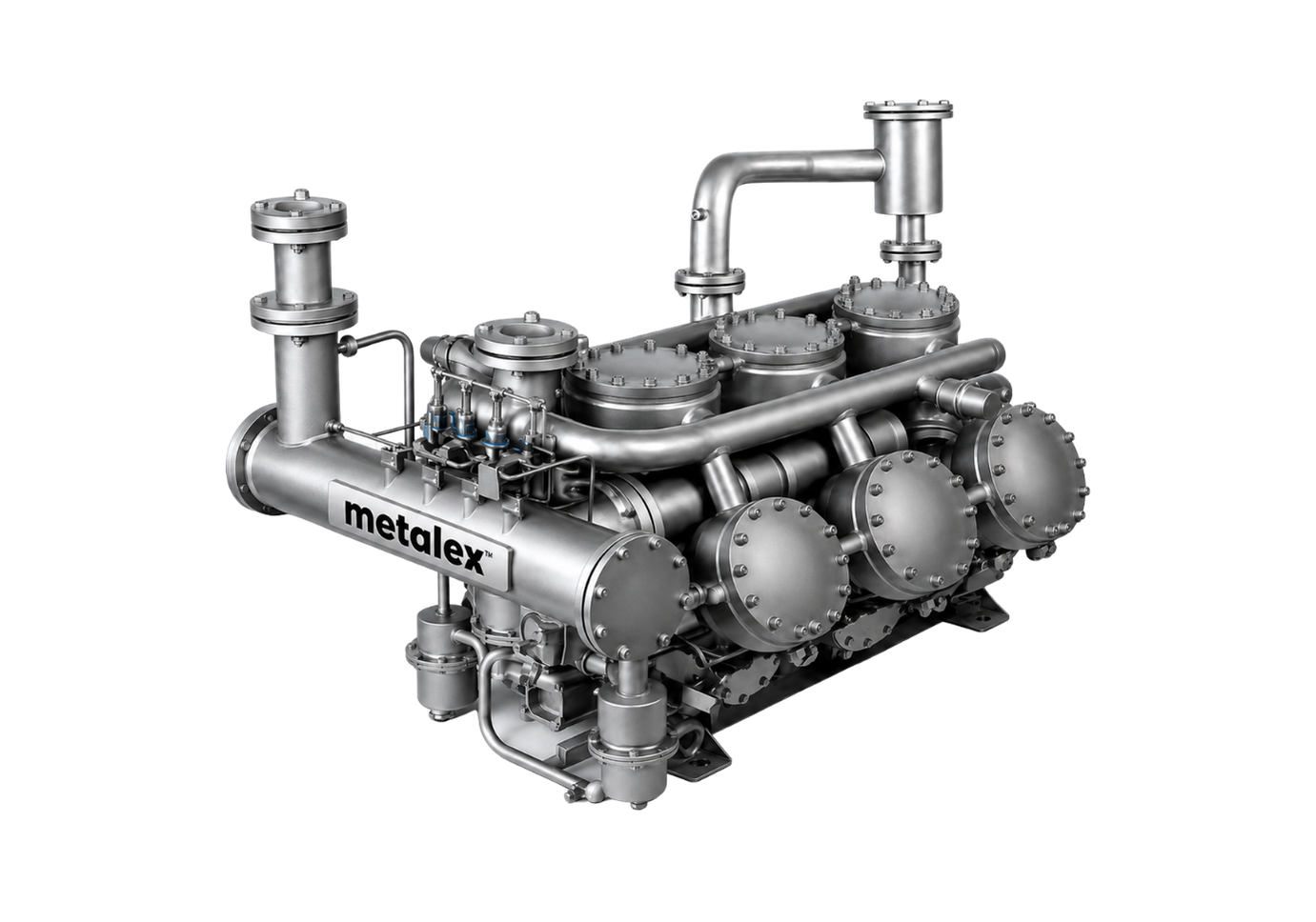
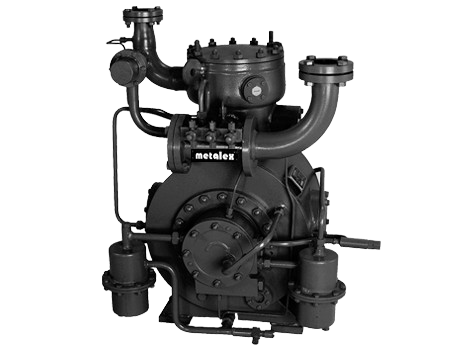
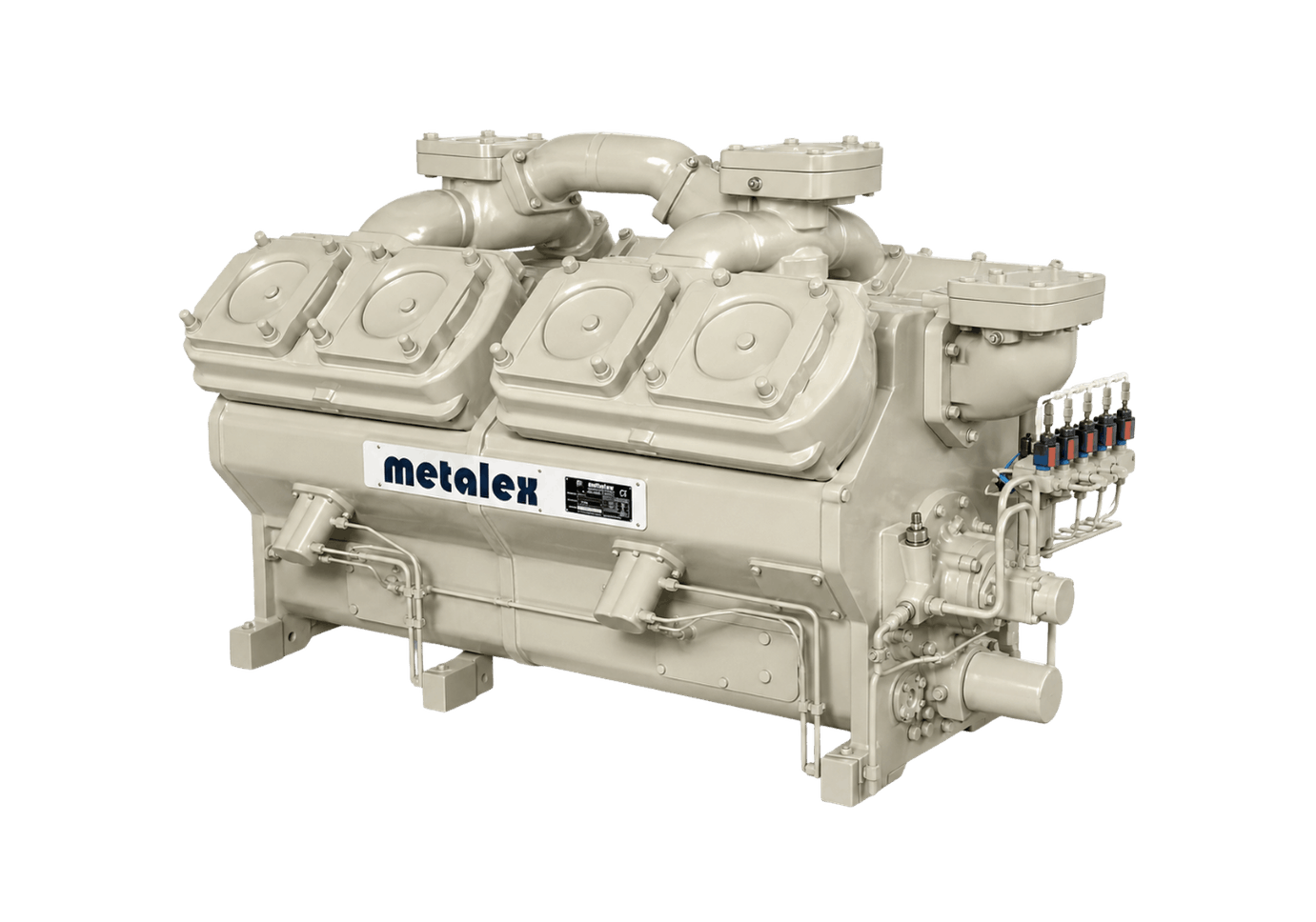
Metalex refrigeration compressors, condensers, compatible vessels,
controls, and auxiliary skids may support pre-cooling or
balance-of-plant duties where the operating conditions and
materials are suitable. The core gas-process package, cryogenic
heat exchangers, expanders, process-gas compressors, cold box, and
cryogenic storage must be confirmed with the specialist process
technology provider.
Send the gas analysis, source, flow, feed pressure and
temperature, required liquid product and purity, capacity,
operating schedule, contaminants, available utilities, preferred
process route if any, storage and dispatch requirement, site
location, plot constraints, safety basis, project stage, and
existing equipment details.
Planning a gas liquefaction project?
Share the gas composition, feed conditions, liquid-product
specification, capacity, purity and recovery, operating profile,
storage and dispatch, utilities, safety basis, location, project
stage, and timeline.
Discuss the integration scope
Talk to Metalex about compatible refrigeration compressor
packages, pre-cooling, condensers, vessels, auxiliary skids,
controls, balance-of-plant integration, expansion, retrofit,
service, and spare support.