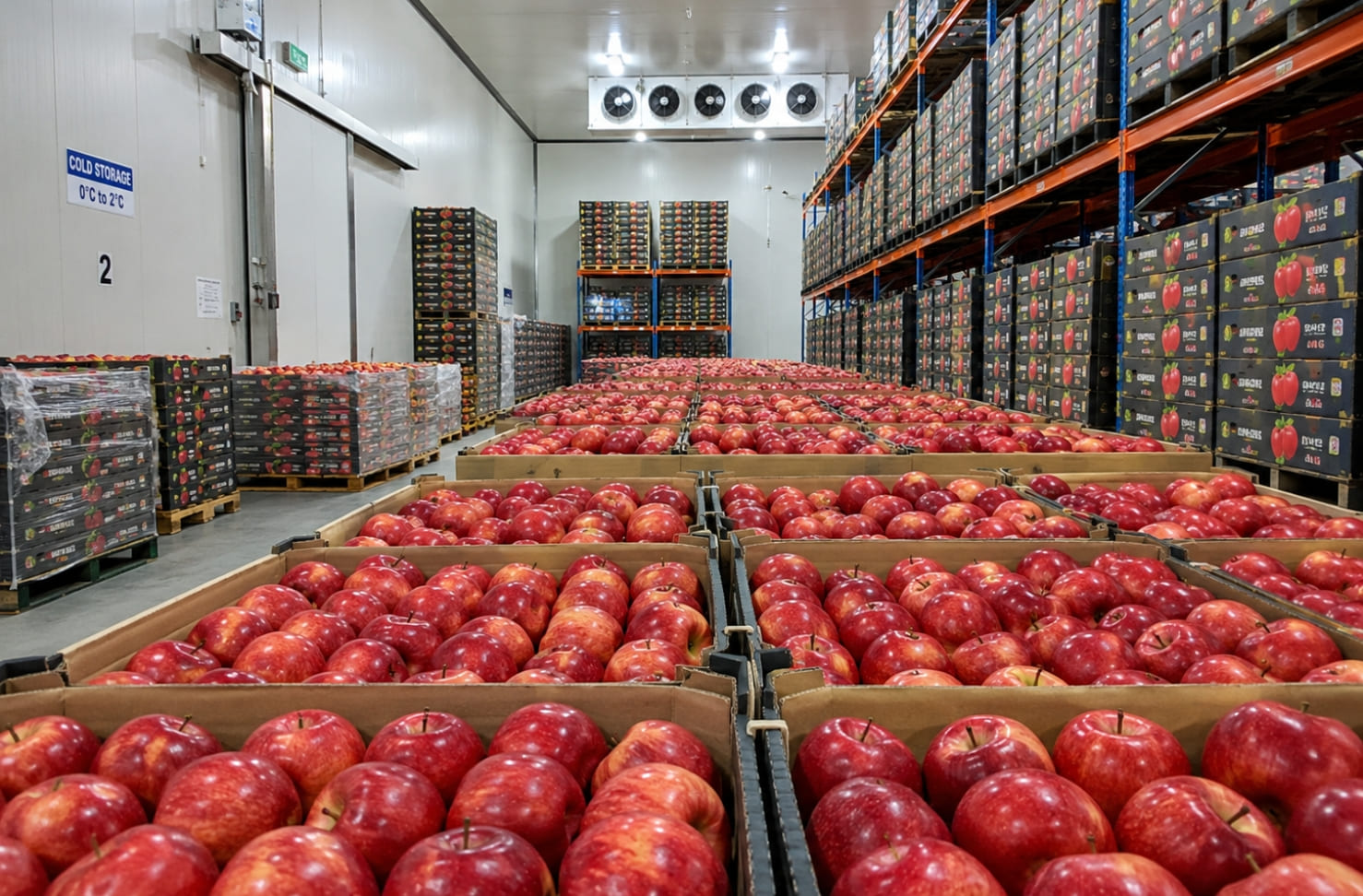
For apple, pear, grape and other export-oriented fruit businesses, refrigeration affects product quality, storage flexibility, energy demand and the ability to choose when and where fruit is sold. That makes energy-efficient ammonia refrigeration for fruit storage a stronger commercial proposition than simply talking about installed TR.
Why energy-efficient ammonia refrigeration matters in fruit storage
Energy-efficient ammonia refrigeration means designing the complete system around the actual operating profile instead of selecting equipment only for maximum capacity. Compressor loading, suction pressure, condensing conditions, evaporator performance, insulation, airflow, liquid management and controls all influence plant power.
Fruit-storage loads change through the season. Harvest intake and pull-down create high demand, while long-term holding requires lower but stable cooling. A plant that responds to these conditions can avoid unnecessary compressor work while maintaining the temperature and airflow required by the product.
What a 682 TR fruit-storage project teaches plant owners
The South African project combined reciprocating compressors with variable-frequency drives, adaptive suction-pressure control, high-pressure liquid subcooling and building-level heat-load reduction. The reported result was 20% lower peak power demand.
The important lesson is that efficiency came from coordinated design decisions rather than one “high-efficiency” component.
Variable-speed compressor operation
Fruit stores rarely operate at full design load throughout the year. VFD-controlled reciprocating compressors can allow capacity to follow actual demand more closely. Any VFD strategy must still respect compressor speed limits, lubrication, motor cooling, oil return and manufacturer requirements.
Adaptive suction-pressure control
Keeping suction pressure lower than necessary increases compressor lift. In a multi-room store, chambers may move from pull-down to holding duty at different times. Allowing suction pressure to rise when room conditions permit can reduce compression work without compromising storage requirements.
Subcooling and heat-load reduction
High-pressure liquid subcooling can reduce flash gas and improve useful liquid supply to evaporators. Insulation, floor heat gain, door infiltration and air leakage also matter because every avoidable heat gain becomes refrigeration load.
CA storage protects product value, not only room temperature
Controlled-atmosphere storage combines refrigeration with controlled oxygen, carbon dioxide, temperature, humidity and airflow. The objective is to slow fruit respiration and ripening while maintaining marketable quality for a longer period.
For exporters, that can create a wider selling window and more flexibility in dispatch timing, destination markets and pack-house scheduling. Actual storage life still depends on variety, harvest maturity, pre-cooling, atmosphere settings, humidity, handling and operating discipline.
Metalex’s fruit and vegetable storage solutions and apple cold-storage solutions provide useful starting points for project discussions around chamber planning, CA or non-CA requirements and refrigeration duty.
Design priorities for fruit exporters and CA cold stores
A serious refrigeration study should begin with the product and operating profile, not the compressor model.
Project teams should evaluate:
- fruit type and variety;
- daily harvest intake and pull-down requirement;
- storage capacity and chamber count;
- target product and room temperatures;
- humidity and airflow requirements;
- pre-cooling and loading sequence;
- seasonal ambient conditions;
- holding load versus peak load;
- available electrical capacity; and
- future expansion requirements.
These inputs affect evaporator duty, suction groups, compressor staging, condenser selection, refrigerant circulation, vessels, controls and electrical infrastructure. Metalex’s cold-storage project solutions can support early discussions around storage configuration and refrigeration scope.
Select compressors, condensers and vessels as one system
The compressor receives most of the attention in an ammonia plant, but efficiency depends on the complete refrigerant circuit.
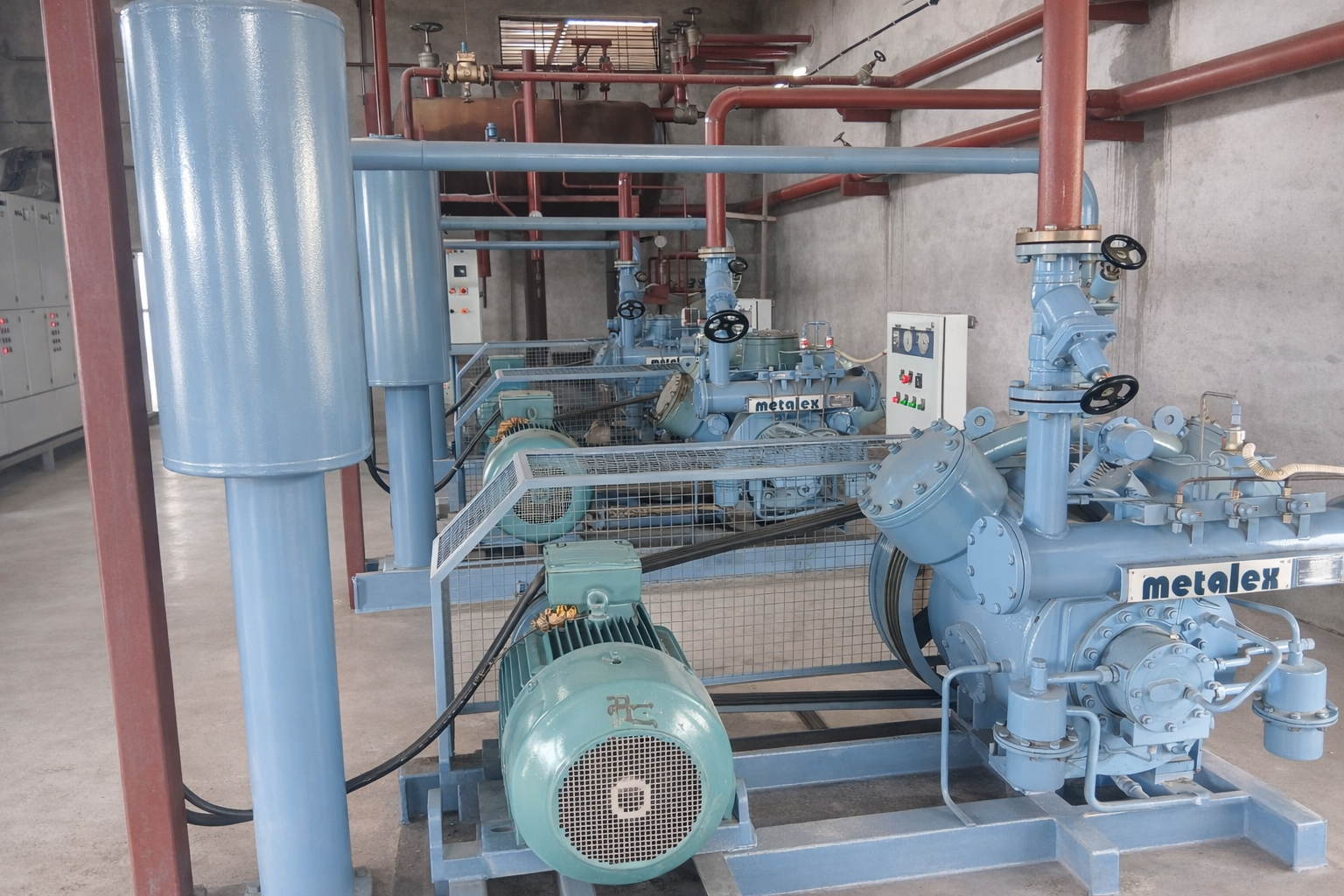
Reciprocating ammonia compressors should be selected for required suction and condensing conditions, capacity range, operating hours and expected part-load profile. Oversizing can lead to poor part-load operation, while undersizing can make harvest pull-down difficult.
Heat rejection is equally important. Unnecessarily high condensing pressure increases compressor work, while vessel sizing and liquid-vapour separation affect stable operation.
Metalex’s plant equipment range includes evaporative condensers, pressure vessels, valves, purgers and control panels. Its ammonia refrigeration pressure vessels cover high- and low-pressure duties used for refrigerant storage, separation and circulation.
Common mistakes that increase fruit cold-storage power demand
A plant can have good equipment and still consume unnecessary energy. Common problems include running suction pressure lower than the product requires, allowing condensing pressure to remain high, operating multiple compressors at poor part load, using fixed set points for variable loads and neglecting heat-transfer surfaces.
Another mistake is separating refrigeration design from the building. Insulation, doors, chamber layout, product stacking and airflow all influence load. For CA stores, air distribution must protect product quality, not only reduce fan power. The strongest projects treat the fruit, chamber envelope, air system, refrigeration plant and controls as one system.
Conclusion
Energy-efficient ammonia refrigeration for fruit storage should support both product quality and commercial flexibility. The objective is not simply to install enough capacity for the peak load. A well-planned plant should handle harvest pull-down, maintain stable long-term storage conditions and respond efficiently when load falls.
For fruit exporters, CA stores and large cold-storage operators, that creates a stronger business case: protect product value while reducing energy demand. Metalex can support project teams with reciprocating ammonia compressors, plant equipment and engineered cold-storage discussions based on capacity, operating conditions, electrical constraints and future expansion.