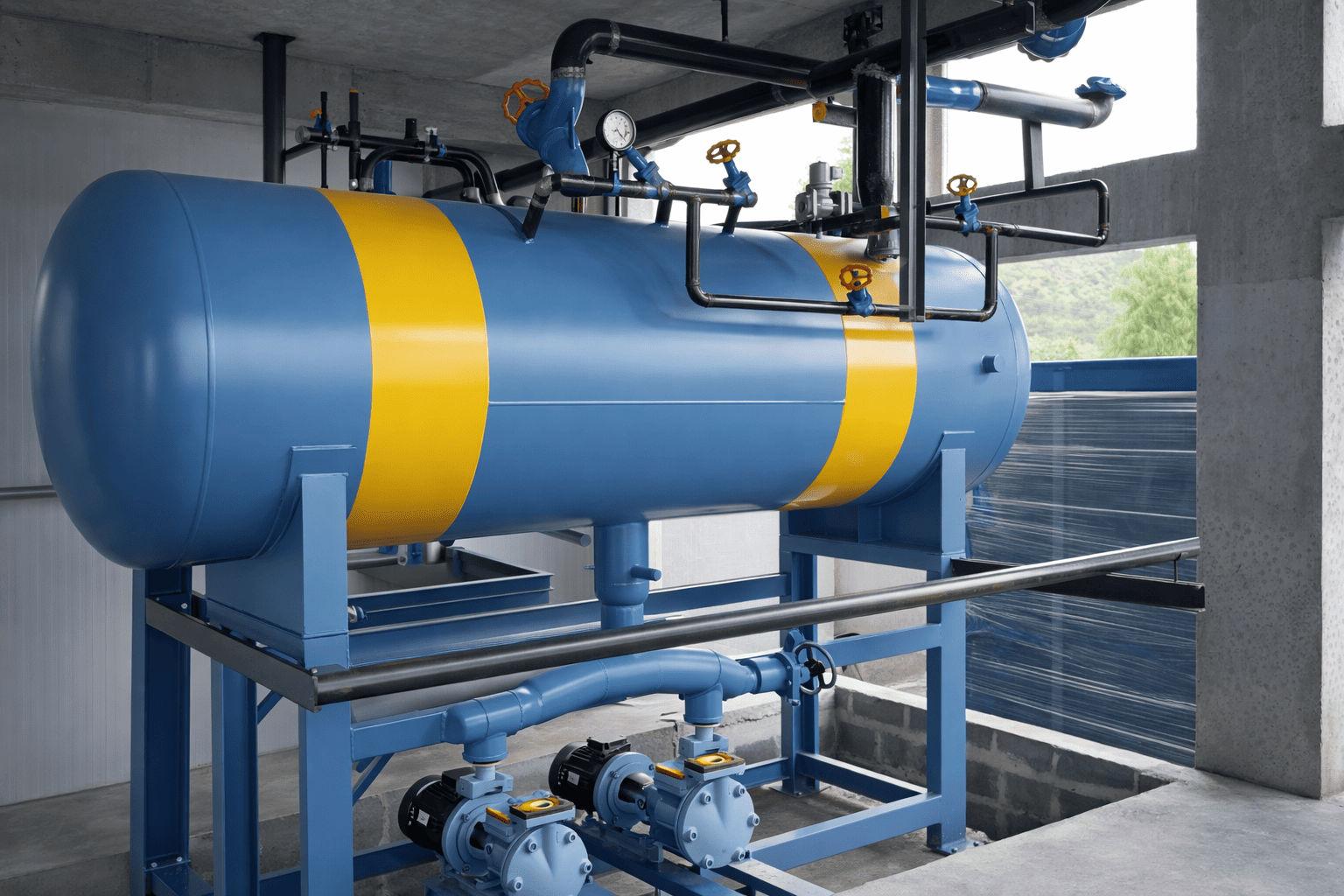
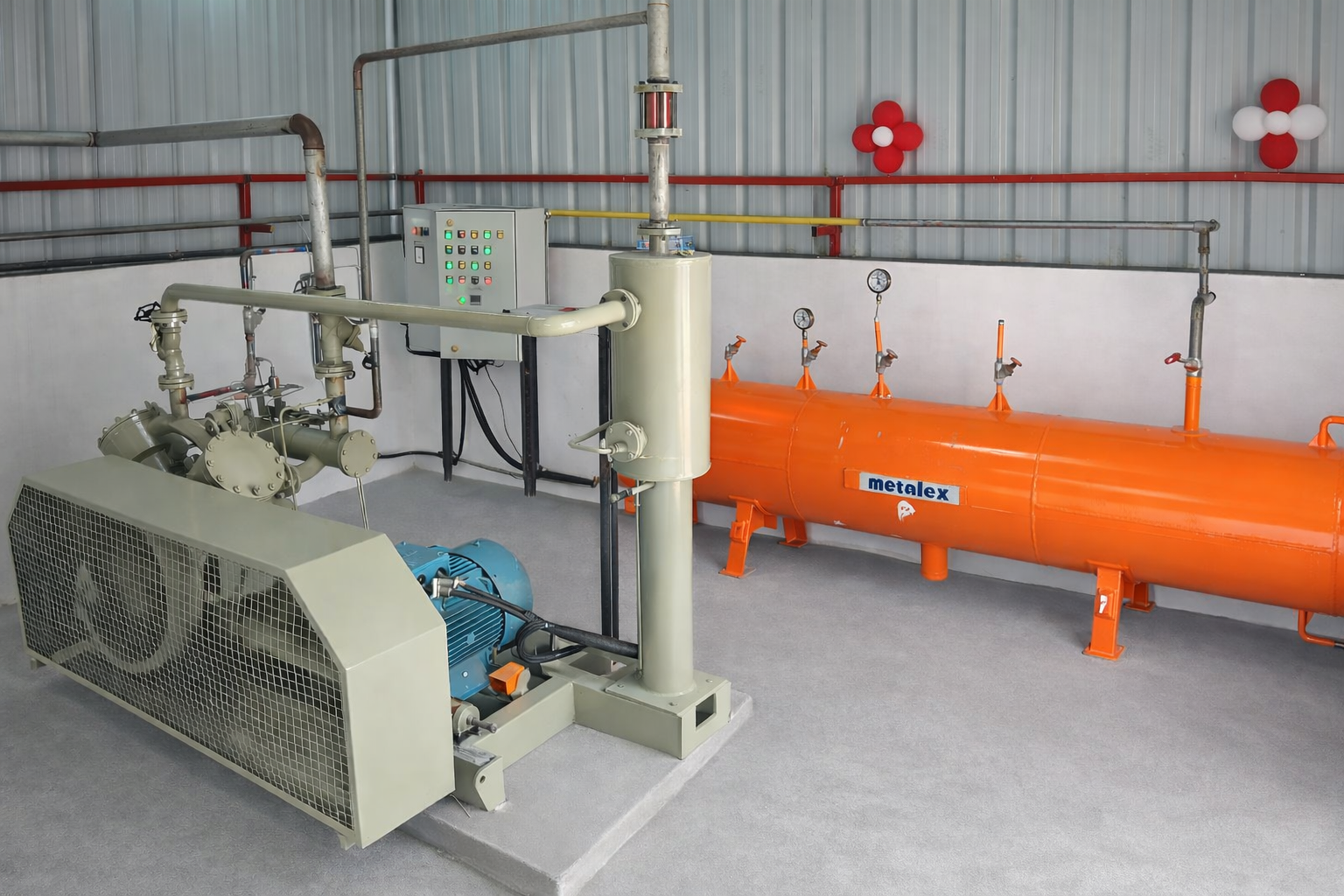
“Pressure vessel” is a broad category in industrial ammonia refrigeration. A plant may contain a high-pressure receiver, a low-pressure receiver, intercoolers, oil separators, surge drums, suction accumulators and other vessels—each with a different hydraulic and thermodynamic duty. Metalex manufactures this wider refrigeration pressure vessel range for industrial refrigeration and project applications.
Start with Vessel Duty, Not Vessel Diameter
A good specification begins by defining what the vessel must do in the refrigeration system. Pressure and volume are essential, but they are not sufficient. The engineer should first define whether the equipment is storing liquid, separating oil, separating liquid from vapour, receiving surge volume, providing inter-stage cooling, feeding refrigerant pumps or protecting compressor suction.
Once the duty is clear, the vessel geometry, internal arrangement, nozzle positions, instrumentation and control requirements can be designed around that duty.
1. Define Operating and Design Conditions
- Refrigerant: anhydrous ammonia (NH3) and any project-specific purity or material considerations.
- Normal operating pressure and temperature range.
- Design pressure and design temperature determined from the system and applicable code—not from a generic catalogue value.
- Internal and external pressure cases where relevant.
- Expected liquid inventory, vapour flow and transient operating scenarios.
- Location: indoor machinery room, outdoor installation, elevated structure or packaged skid.
2. Size for the Real Process Function
Different vessels have different dominant sizing criteria. A high-pressure receiver may be driven by refrigerant inventory and pump-down requirements. An LP receiver needs both liquid storage and vapour-liquid separation capacity. A surge drum or accumulator must consider liquid disengagement plus the maximum credible amount of liquid that can return from connected evaporators. An oil separator must be selected around compressor discharge flow and the required oil-separation performance.
This is a critical point for engineering and procurement: buyers searching for an “ammonia receiver sizing” formula should understand that no single formula safely covers every vessel duty. A strong technical manufacturer should ask for the operating data before proposing the final vessel.
3. Engineer Nozzle Locations Around Flow Behaviour
Nozzle layout affects how the vessel works. Liquid inlets should not create unnecessary disturbance near suction outlets. Pump outlets need stable liquid supply. Oil drains should be located where oil can actually collect. Level columns and gauge connections should reflect the intended operating range. Relief connections must suit the system relief design and code requirements.
For low-pressure vessels, inlet and outlet separation, anti-vortex provisions, liquid collection and suction-outlet placement can materially affect pump and compressor behaviour. For high-pressure receivers, condenser drainage, liquid outlet, equalisation and maintenance isolation are key considerations. The surrounding isolation philosophy should also be coordinated with suitable refrigeration valves and the project P&ID.
4. Specify Fabrication, Materials and Examination Clearly
Where applicable, ASME Section VIII, Division 1 provides requirements for pressure-vessel design, materials, fabrication, examination, inspection, testing and certification. The project specification should state the required code basis, material grade, design conditions, weld examination, heat treatment where required, corrosion allowance where justified, hydrostatic or pneumatic testing requirements, certification and documentation.
Avoid turning a historical rule of thumb into a fixed project requirement. Joint efficiency, corrosion allowance, plate thickness, radiography percentage and heat treatment depend on the selected code route, material, weld details and project specification. They should be engineered, not copied.
5. Treat Level Control and Relief Protection as Part of the Vessel Design
Level indication is not an accessory added after fabrication. The usable liquid range determines where normal operation, alarms and trips can be established. On an LP receiver, high level may be linked to compressor protection and low level to pump protection. On an HP receiver, liquid level influences refrigerant inventory and condenser drainage.
Pressure-relief devices must be selected, installed and piped in accordance with the governing design and safety standards. OSHA and EPA both provide public ammonia-refrigeration resources that emphasise documented operating limits, pressure relief, maintenance and process-safety controls for ammonia systems.
6. Design for Serviceability and Plant Life
Pressure vessels should also be coordinated with the wider industrial refrigeration plant equipment package so valves, condensers, controls, piping access and maintenance clearances work together at site.
- Provide safe access to valves, level devices, drains, relief manifolds and inspection points.
- Allow practical isolation for maintenance without creating trapped liquid or unsafe pressure conditions.
- Use suitable insulation and vapour-barrier systems on cold low-pressure equipment.
- Protect outdoor equipment against corrosion and environmental exposure.
- Coordinate vessel supports, nozzle loads and piping flexibility with the plant structure.
- Keep documentation aligned with the final as-built P&ID, vessel data sheet and operating procedures.
Metalex Pressure Vessels Beyond HP and LP Receivers
Metalex’s refrigeration pressure vessel range includes intercoolers, subcoolers, oil separators, surge drums and accumulators for project-specific refrigeration duty. This creates an opportunity to standardise vessel fabrication, valve philosophy, supports and project documentation across a single ammonia plant instead of sourcing each pressure vessel independently.
Why System Integration Improves Vessel Specification
Metalex’s strength in this category is the connection between vessel manufacturing and refrigeration-system engineering. Its plant equipment range brings together compressors, evaporative condensers, high-pressure receivers, low-pressure receivers, intercoolers and refrigeration valves, while its industrial applications cover cold storage, process plants and other refrigeration duties.
For an EPC consultant, plant owner or refrigeration contractor, that means the pressure-vessel conversation can begin with system duty and operating data—not with a generic catalogue diameter.
Pressure-Vessel Enquiry Data Sheet: Minimum Information to Send
- Vessel duty and tag number.
- Refrigerant and refrigeration-system type.
- Operating pressure/temperature and design pressure/temperature.
- Required gross and usable volume, or the system data needed for sizing.
- Liquid and vapour flow rates where separation is involved.
- Pump-down, surge or defrost-return requirement where applicable.
- Nozzle sizes, orientation and P&ID or piping sketch.
- Level instruments, valves, relief devices and control philosophy.
- Material, code, NDE, test and documentation requirements.
- Installation orientation, support/skid, insulation and site constraints.
Frequently Asked Questions
Which pressure vessels are used in ammonia refrigeration systems?
Common examples include high-pressure liquid receivers, low-pressure receivers or pump separators, intercoolers, oil separators, surge drums, suction accumulators and other project-specific separators or storage vessels.
What code is used for ammonia refrigeration pressure vessels?
The required code depends on project location and jurisdiction. ASME Section VIII, Division 1 is a widely used pressure-vessel construction standard, while the complete refrigeration system must also comply with applicable refrigeration and safety requirements.
Is vessel volume enough to select an ammonia receiver?
No. Selection may also depend on vapour flow, separation velocity, surge volume, operating liquid range, pump suction, nozzle arrangement, refrigerant inventory and maintenance conditions.
What material is commonly used for industrial refrigeration pressure vessels?
Pressure-vessel-quality carbon steel is commonly used for ammonia refrigeration equipment, but the exact material grade, thickness, impact requirements and fabrication route must follow the design code and operating temperature.
Why are nozzle locations important on ammonia vessels?
Nozzle positions influence flow distribution, liquid-vapour separation, pump suction, oil drainage, level indication and serviceability. They should be based on vessel duty and the project P&ID.
Does Metalex manufacture vessels other than receivers?
Yes. Metalex presents ammonia vessels, receivers and related pressure equipment within its current pressure vessel range.