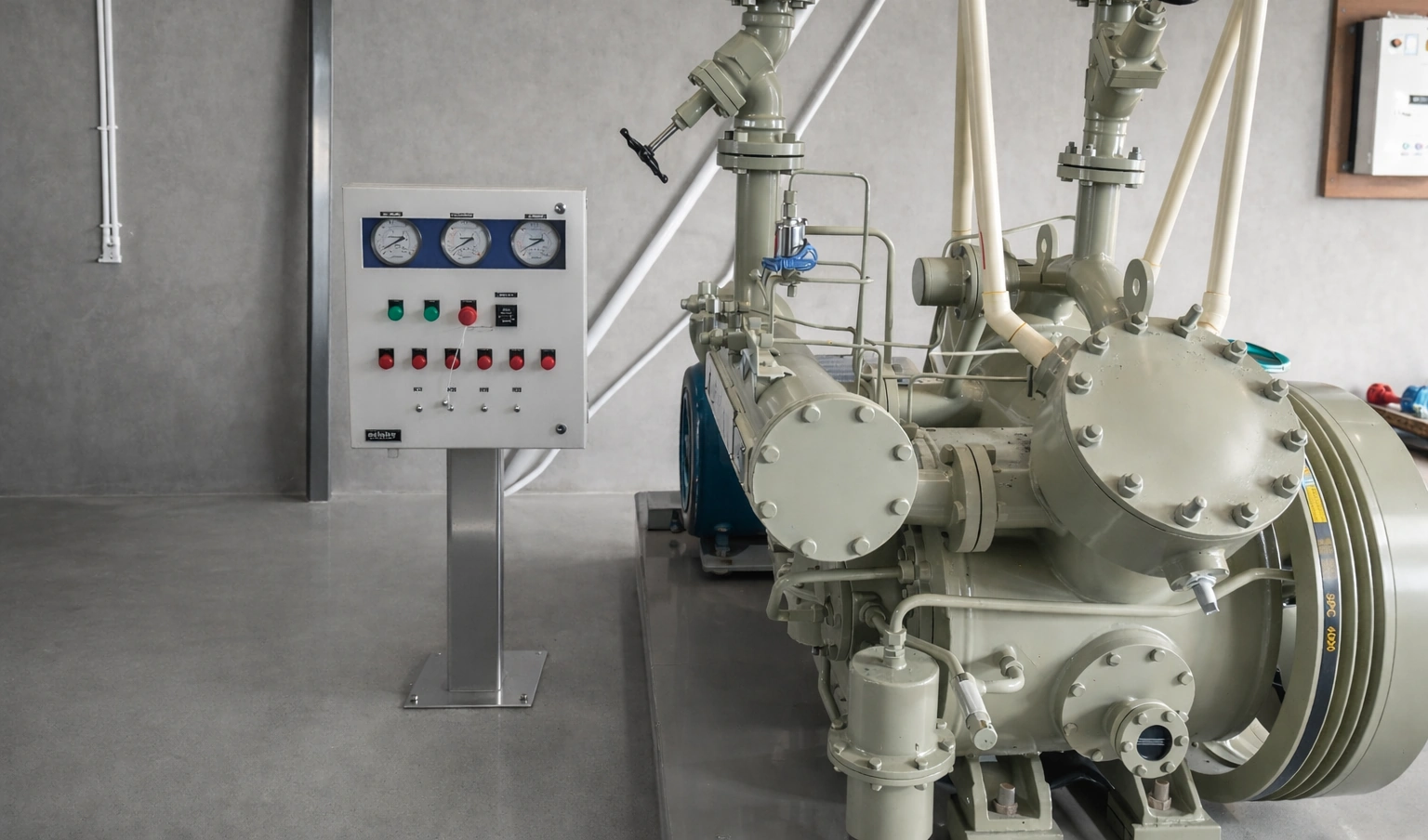
A high discharge temperature in an ammonia compressor is best understood as an operating signal that should be read together with suction pressure, discharge pressure, condensing condition, superheat, cooling arrangement and load. In a reciprocating R717 ammonia compressor, discharge temperature rises naturally during compression. The purpose of this guide is to help operators review the complete refrigeration-system condition and compare it with the compressor's intended operating duty.
Start with the operating data before making any adjustment. Record suction pressure, discharge pressure, suction temperature, discharge temperature, condensing condition, cooling arrangement, motor load and recent plant changes, then compare those values with the approved operating duty and control settings.
What high discharge temperature means in an ammonia compressor
A reciprocating ammonia compressor raises the pressure of low-pressure ammonia vapour so heat can be rejected at the condenser. Compression also raises refrigerant temperature. The actual discharge temperature depends on suction condition, condensing pressure, compression ratio, suction superheat, compressor design, cooling arrangement and machine condition.
There is no single universal discharge-temperature limit that should be applied to every ammonia compressor. The correct alarm and trip limits must follow the compressor model, control philosophy and approved plant documentation. If a high-temperature alarm or cutout operates, do not bypass it simply to keep production running. OSHA process-safety records treat compressor controls and excess-discharge-pressure protection as important parts of ammonia refrigeration safety.
Key operating factors that influence ammonia compressor discharge temperature
1. Condensing pressure and heat rejection
Condensing pressure has a direct relationship with compressor lift and discharge temperature. Stable heat rejection therefore starts with the condenser selection, site ambient or wet-bulb condition, air or water flow and the operating set point used for the refrigeration plant.
For plants using a Metalex evaporative condenser, review the fan, spray-water circuit, pump operation, coil condition, water quality and actual condensing condition as part of routine plant monitoring. Metalex condenser selection is based on refrigerant, wet-bulb temperature, condensing temperature and site condition.
2. Suction pressure and compression ratio
Suction pressure influences the compression ratio and therefore the work required from the compressor. A useful operating review compares the selected evaporating condition with the real product, room or process requirement, together with evaporator feed, airflow and suction control.
Keeping the evaporating condition aligned with the real refrigeration duty supports efficient compressor operation. The plant log should be used to compare suction trends with room load, product temperature and compressor capacity control rather than interpreting one reading in isolation.
3. Suction superheat and refrigerant feed
Suction superheat is one of the operating conditions that influences discharge temperature. A balanced refrigerant feed, suitable suction-line insulation and correctly commissioned controls help keep the suction condition consistent with the plant design. IIAR technical literature discusses the relationship between superheat and compressor discharge temperature.
4. Compressor cooling arrangement and plant utilities
The Metalex MX Series is a water-cooled reciprocating ammonia compressor range. In this configuration, the water-cooling arrangement helps manage compressor operating temperature during continuous industrial duty. Metalex selection guidance therefore includes cooling-water availability, water quality and plant utilities as part of proper MX Series selection and service planning.
Metalex also offers the IS Series air-cooled ammonia compressors for sites where water use is limited or water hardness is high, and the MXT / T Series with air-cooled operation and no compressor water-cooling requirement on the published T Series models. The discharge-temperature review should therefore follow the cooling architecture of the installed Metalex series.
5. Compressor valve condition and gas flow
Reciprocating compressor valves influence gas flow, volumetric efficiency and cylinder performance. A planned service review can combine pressure trends, capacity, sound, vibration and service history to understand valve condition as part of the complete compressor operating picture.
For wider refrigeration-system isolation and flow control, Metalex also supplies ammonia refrigeration valves, including stop valves, check valves and globe valves.
6. Actual plant duty compared with compressor selection
Metalex compressor selection is based on the required refrigeration capacity, evaporating temperature, condensing condition, operating hours, ambient condition, cooling arrangement, power availability and plant layout. Comparing current plant duty with those original selection inputs is a useful part of any operating review.
When production capacity, room temperature requirements or plant layout changes, a refrigeration plant upgradation review can reassess load, compressor sequencing, condenser capacity, piping and controls so the system remains matched to the new duty.
7. Refrigerant flow, system cleanliness and purging
Stable refrigerant flow and clean system components support predictable suction and discharge conditions. Routine plant checks can include filters, strainers, valve positions, piping condition and purging practice. Where non-condensable gases are present, Metalex Air Purgers are designed to remove them from ammonia refrigeration systems, helping support steady heat transfer, lower unnecessary compressor load and efficient plant operation.
8. Planned lubrication and mechanical service
Consistent lubrication, routine inspection, correct alignment and planned service support long-term reciprocating compressor reliability. Metalex provides plant audits, compressor overhauls, preventive maintenance, spare planning and operator guidance for ammonia refrigeration plants. Service work should follow the compressor documentation and the site's approved isolation and maintenance procedures.
Operating review table: what to check first
| Observation | Possible direction | What to verify |
|---|---|---|
| Higher discharge pressure with higher temperature | Heat-rejection condition | Condenser operation, fan or pump status, air/water flow, ambient condition and condensing set point |
| Lower suction pressure with higher discharge temperature | Compression-ratio review | Evaporator feed, suction set point, airflow, strainers, valves and actual product temperature requirement |
| Higher suction temperature at stable pressure | Superheat review | Evaporator feed, suction-line heat gain, insulation, controls and load condition |
| One cylinder shows a different temperature pattern | Cylinder and valve review | Temperature trend, sound, vibration, capacity and planned service history |
| Temperature trend changes after plant expansion | Updated duty review | Refrigeration load, suction group, condenser capacity, compressor sequencing and control logic |
| Temperature trend changes with cooling-water conditions | MX utility review | Cooling-water flow, water quality, inlet condition and project utility settings |
A practical operating review sequence for plant teams
- Confirm the reading. Verify the sensor or thermometer and compare it with the plant's normal operating trend.
- Record suction and discharge pressure. Review pressure and temperature together for a meaningful operating picture.
- Review the condenser side. Check fan, pump, spray water, cooling water or heat-rejection condition as applicable.
- Review suction conditions. Compare evaporator feed, room or process load, suction set point and airflow with the design duty.
- Compare compressor load. Note motor current, capacity-control position, running cylinders and operating hours.
- Review recent plant changes. New room loads, revised set points, maintenance work or production changes can explain a different operating trend.
- Use the approved service procedure. Where the operating trend remains outside the expected range, use trained ammonia refrigeration personnel and the site's engineering procedure.
Protective controls and reliable ammonia compressor operation
High-temperature cutouts and pressure controls are part of the protective control philosophy used on industrial refrigeration equipment. Their inspection, testing and approved settings should form part of the plant's preventive-maintenance and process-safety programme.
When a protective control indicates an out-of-range operating condition, follow the site's approved operating procedure and use trained refrigeration personnel. Metalex provides plant audits, troubleshooting, compressor overhauls, preventive maintenance, energy reviews and operator guidance for ammonia refrigeration plants.
Practices that support stable discharge temperature and reliable operation
- Maintain a daily operating log. Record suction pressure, discharge pressure, suction temperature, discharge temperature, motor current and condenser conditions.
- Maintain efficient heat rejection. Keep condenser surfaces, spray systems, water treatment, fans and pumps within the planned maintenance programme.
- Keep suction conditions aligned with duty. Maintain evaporator cleanliness, airflow and control settings according to the process requirement.
- Include valves and controls in planned inspection. Review refrigeration valves, controls and service history as part of the whole system.
- Match utilities to the compressor series. For water-cooled MX installations, monitor cooling-water condition; for air-cooled IS and MXT/T installations, maintain the published air-side requirements.
- Review plant changes. Use a plant upgradation study after expansion or significant changes in production duty.
- Train operators. Operating support and training can reinforce logbook discipline, daily checks and correct interpretation of plant trends.
For existing plants, planned servicing and maintenance support can be structured around equipment age, operating hours and application criticality. Operator guidance can also focus on daily checks, trend logging and consistent plant operation.
Metalex compressor ranges and complete refrigeration system support
Metalex's reciprocating ammonia piston compressor range includes the water-cooled MX Series, air-cooled IS Series and air-cooled MXT / T Series. Each range uses a different cooling architecture, allowing compressor selection to be matched with plant utilities, ambient conditions and refrigeration duty.
The Metalex industrial refrigeration plant equipment range also includes evaporative condensers, pressure vessels, valves, purgers, control panels, spares and maintenance support. Reviewing the complete refrigeration system helps connect compressor operating data with heat rejection, refrigerant flow and plant controls.
Useful Metalex pages
Related Metalex system and project resources
High compressor discharge temperature can be influenced by more than the compressor itself. These current Metalex and Refrigeration Projects pages cover valves, receivers, system equipment, cold storage applications, process refrigeration and plant support.
Metalex refrigeration equipment
Technical safety references
These references are included for broader ammonia-refrigeration safety context. Project-specific limits and service procedures must still follow the compressor documentation, site procedures and applicable local requirements.
Is your ammonia compressor running at high discharge temperature?
Share the compressor model, suction pressure, discharge pressure, suction temperature, discharge temperature, condensing condition, motor current, cooling-water or condenser condition, recent operating changes and site location. This helps the service team review the symptom with useful evidence.
Get QuotesAmmonia compressor high discharge temperature FAQ
Discharge temperature is influenced by condensing pressure, suction pressure, compression ratio, suction superheat, refrigeration load, cooling arrangement and overall system operation. Start with the actual operating data of the Metalex R717 ammonia piston compressor and compare it with the selected duty.
Suction pressure influences the compression ratio and therefore the compressor work. Review the actual evaporating condition against the selected R717 ammonia compressor duty, product requirement and current plant load.
The condenser establishes the heat-rejection side of the refrigeration cycle. Reviewing wet-bulb or ambient condition, fan and pump operation, spray-water or cooling-water flow and condensing set point helps keep the operating condition aligned with design. See the Metalex evaporative condenser range.
Use the approved operating, alarm and trip limits for the specific compressor and control system. The correct range depends on the selected duty and machine architecture, including the water-cooled MX Series, air-cooled IS Series and MXT / T Series.
Compressor valves influence gas flow, volumetric efficiency and cylinder performance. Planned service should review pressure trends, capacity, sound, vibration and service history together. For wider system flow control, Metalex supplies ammonia refrigeration valves, stop valves, check valves and globe valves.
Share the compressor model and serial number if available, refrigerant, suction and discharge pressures, suction and discharge temperatures, motor current, condensing condition, cooling arrangement, recent plant changes and site location. Metalex can use these inputs as part of an engineering and service review.
Metalex offers the water-cooled MX Series, air-cooled IS Series and air-cooled MXT / T Series. Final selection depends on refrigeration capacity, evaporating temperature, condensing condition, cooling arrangement, ambient conditions and plant utilities. Start from the Metalex ammonia piston compressor selection page.
A complete system review can include evaporative condensers, ammonia valves, pressure vessels, refrigeration purgers and the wider Metalex industrial refrigeration plant equipment range.